Quarter Machines and Deep Cuts: Why the Jukebox Is the Most Honest DJ Left in America
There's a Wurlitzer in a bar outside Knoxville that hasn't been restocked since 2009. The owner — a woman named Darlene who's been pouring drinks at the same counter for thirty-one years — says she's been offered a digital upgrade three times. Three times she said no. "People know what they want in here," she told us, wiping down the bar without looking up. "They don't need a machine telling them."
That Wurlitzer plays Waylon Jennings, some early Lucinda Williams, a Hank Williams Jr. track that nobody outside of a sixty-mile radius seems to remember loving this much. And on Friday nights, there's a line of regulars waiting to put quarters in before the next person beats them to it. It's not nostalgia. It's territory.
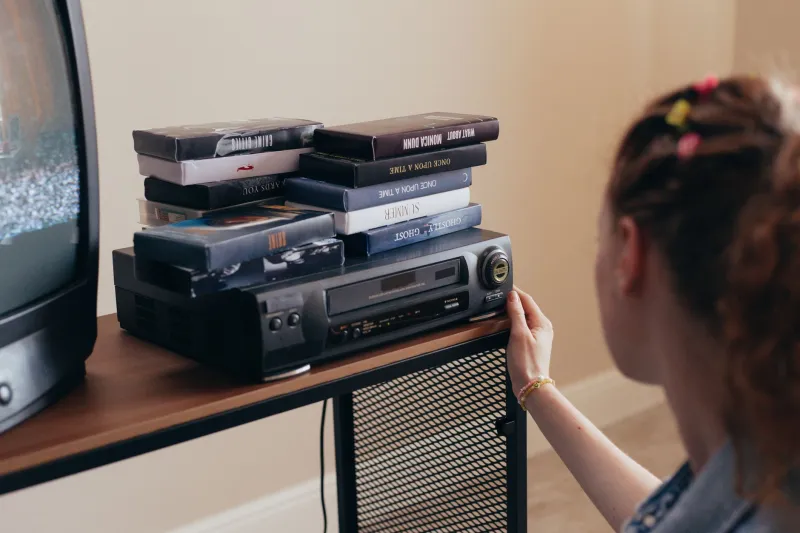
This is the underground world of the American jukebox — not the touchscreen digital boxes that stream from a cloud and charge you $1.50 a song, but the physical, mechanical, often temperamental machines still spinning vinyl or CDs in dive bars, roadhouses, and greasy-spoon diners across the country. They're not everywhere. But where they exist, they mean something.
The Machine That Knows the Room
Streaming algorithms are built on averages. They look at what millions of people listened to and reverse-engineer a version of taste that's technically correct and culturally bloodless. A jukebox doesn't do that. A jukebox was stocked by a person — sometimes a distributor rep, sometimes the bar owner herself, sometimes a regular who talked the owner into adding a specific record — and it reflects a community's actual listening history in a way no playlist can replicate.
In a roadhouse outside Baton Rouge, the jukebox carries zydeco records that never made it to any streaming platform. In a Polish neighborhood bar in Chicago's northwest side, you'll find polka next to classic soul next to some mid-2000s hip-hop that the owner's son swore was essential. In a truck stop diner in rural New Mexico, there's a section of the machine that's been playing the same Tejano records for fifteen years because the regulars will riot if anyone touches them.
These aren't curated playlists. They're accumulated decisions. And that difference matters more than it sounds.
The Regulars Who Guard the Queue
Every jukebox bar has them — the people who treat the machine like it's their personal responsibility. They know which songs skip. They know which selections are broken and still worth trying. They know the unspoken rules: don't play anything too slow before 9 p.m., don't run up a string of the same artist back to back, and never — under any circumstances — play something ironic.
Mike, a retired electrician who drinks at the same South Philly bar three nights a week, described his relationship with the jukebox there like a second job. "I've been putting money in that thing for twenty years. I know what works. I know what the room needs." He paused. "Some kid came in last year and played four Taylor Swift songs in a row. I don't hold grudges, but."
There's a social contract around these machines that streaming platforms have never managed to replicate. When you put a quarter in a jukebox in a room full of people, you're making a public statement. You're accountable. That accountability — that slight vulnerability of choosing music for a room and owning it — is exactly what's missing from the private earbud experience most of us live inside now.
Deep Cuts as Community Memory
What makes a physical jukebox genuinely radical in 2024 isn't the hardware. It's what's on it. Because the catalog doesn't update automatically, these machines become time capsules — but not in a kitschy, retro-aesthetic way. More like a geological record of what a specific group of people actually cared about at specific moments in time.
A bar in rural Mississippi might have a B.B. King track that never charted sitting next to a local blues artist who recorded exactly one album in 1987 and is otherwise unknown outside a three-county radius. That combination tells you something true about the people who drink there that no algorithm could reconstruct. It's hyper-local in the most literal sense — not local as a brand aesthetic, but local as in this specific place, these specific people, this specific history.
Music historians and ethnomusicologists have started paying attention. A few academic papers have been written about regional jukebox catalogs as artifacts of community identity. But the bars themselves don't know or care about that framing. They're just not replacing the records.
Why the Digital Upgrade Keeps Getting Turned Down
The jukebox industry has been pushing digital touchscreen models hard for years. They're more profitable for distributors, easier to maintain, and they connect to massive streaming libraries. Some bars have made the switch. Many haven't, and the reasons are more philosophical than practical.
"You put one of those things in here and suddenly every song ever recorded is available," said a bar owner in rural Vermont who asked us not to use his name. "Sounds good until some tourist puts on something completely wrong for this room and nobody can do anything about it. At least with what we've got, there's a limit. The limit is the point."
The limit is the point. That sentence could be the manifesto of every analog holdout in America right now. In a culture that treats infinite choice as the highest possible good, the jukebox is quietly arguing the opposite — that constraint creates identity, that scarcity creates meaning, that a machine that can only play 150 songs is, in some essential way, more honest than one that can play everything.
The Last Honest Curators
We talk a lot about curation in media and music right now, but what we usually mean is algorithmic filtering dressed up in human language. Real curation is messier. It involves preference and bias and local knowledge and the specific memory of a song that meant something to someone in a room on a Tuesday night in 1994.
The jukebox holds all of that. It doesn't optimize. It doesn't personalize. It doesn't learn. It just plays what's in it, chosen by people who had opinions and weren't afraid to press them into vinyl.
Darlene's Wurlitzer outside Knoxville is still there. Still playing Waylon. Still making people wait their turn. And in a music landscape that's increasingly frictionless, invisible, and designed to disappear into the background of your life, that friction — that small, stubborn machine demanding a quarter and a decision — might be the most culturally honest thing left in the room.