They Used to Rewind Your Tapes. Now They're Saving You From the Algorithm.
They Used to Rewind Your Tapes. Now They're Saving You From the Algorithm.
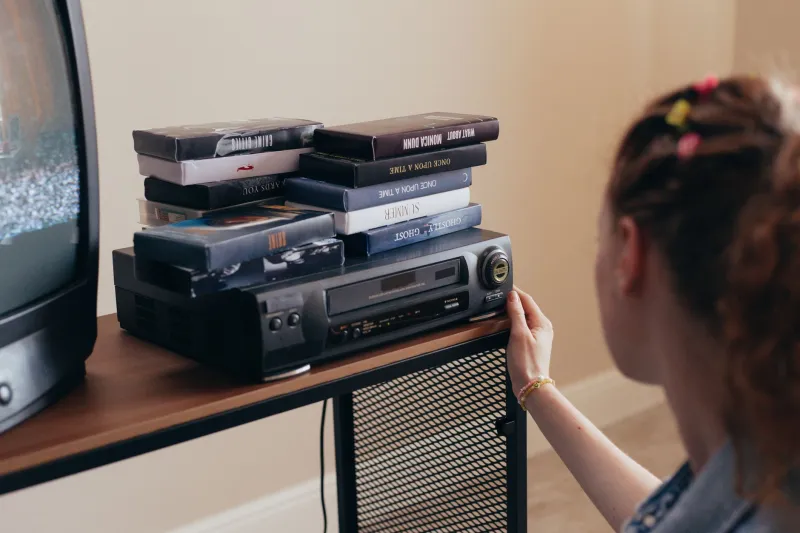
There's a specific kind of grief that doesn't get talked about enough — the kind that hits when you realize you'll never again be talked into watching something you had absolutely no intention of renting. That moment when a clerk with questionable taste in band tees and encyclopedic knowledge of Hong Kong action cinema slid a VHS across the counter and said, trust me. And you did. And it changed something in you.
That era is gone. The stores are gone. But the people? They're still here. And they're angrier, weirder, and more essential than ever.
The Great Dismissal (And Why It Was Wrong)
When Blockbuster collapsed and the last indie video shops started turning into vape stores and nail salons, the cultural consensus was basically: oh well. The clerks — those fluorescent-lit philosophers of film — were treated like buggy whip makers. Casualties of progress. Netflix had the catalog, the algorithm would handle discovery, and human curation was a quaint relic of an analog world.
That assumption aged about as well as a DVD left in a hot car.
Fast forward to 2024 and streaming culture is in full crisis mode. There are over 200 streaming services fighting for attention in the US. Scroll times have ballooned. Decision fatigue is real and measurable. And the algorithm — that cold, data-fed machine optimized for engagement metrics, not genuine taste — keeps serving you the same comfortable slop dressed in different thumbnails.
Into this void walked the video store clerks. Except now they're running Substack newsletters with five-figure subscriber counts, moderating Discord servers where film nerds debate the merits of mid-period Italian giallo at 2am, and building Instagram recommendation accounts that read like love letters to cinema's most overlooked corners.
They didn't reinvent themselves. They just finally found an audience that needed what they'd always been offering.
The People Doing the Work
Take someone like Marcus Webb, who spent eleven years behind the counter at a small independent video store in Asheville, North Carolina. When the shop closed in 2013, he boxed up his knowledge and moved on — or tried to. By 2019, frustrated by the algorithmic dead ends of his streaming queues, he started a newsletter called Wrong Section, named for the habit of mis-shelving cult films in the wrong genre just to see who'd find them.
Today, Wrong Section has over 40,000 subscribers. Webb doesn't review new releases. He surfaces forgotten catalog titles, traces weird distribution histories, and writes about movies the way a sommelier describes a wine — with full context, no condescension, and genuine love for the thing itself. His recommendations have a conversion rate that would make any streaming platform's content team weep.
"People are starving for someone to just say this is good and here's why," Webb told a podcast last year. "The algorithm tells you what other people like. I'm telling you what you might love, based on a real conversation about taste."
Or look at the Discord server After the Beep, founded by a collective of former clerks from three different closed-down shops across the Midwest. The server has grown to nearly 15,000 members and operates like a living, breathing video store — complete with staff picks, themed weekly shelves, and the occasional brutal argument about whether The Wicker Man belongs in horror or folk drama. (It does not belong in folk drama. This is not up for debate.)
What makes these spaces different from the hundreds of film accounts flooding social media is the texture of the knowledge. This isn't listicle culture. These are people who spent years fielding questions from strangers with zero context — something like Pulp Fiction but not as violent, my mom likes it when stuff is a little funny — and actually solving them. They learned to read people, not just films.
The Analog Brain in a Digital World
There's something almost counterintuitive happening here. In a media landscape obsessed with data, the most valuable thing these curators bring is precisely the stuff that can't be datafied: gut instinct, contextual memory, the ability to connect a film's emotional register to a specific human moment.
Algorithms optimize for what you've already watched. A good clerk optimized for who you were becoming.
That's the gap. And a generation of viewers — particularly younger ones who never set foot in a video store but are absolutely exhausted by Netflix's "Because you watched..." logic — are filling it with human voices they actually trust.
The newsletters, the Discords, the carefully maintained Letterboxd accounts with hundreds of followers built entirely on word of mouth: these are the new video stores. Messy, opinionated, occasionally wrong, and completely irreplaceable.
What Gets Saved
There's a preservation angle here too that doesn't get enough attention. Video store clerks were, functionally, film archivists. They knew which titles were only available on out-of-print VHS. They knew which foreign films never made it to DVD. They knew the distribution gaps and the licensing nightmares and the titles that fell through every crack.
That knowledge matters more now, not less. Streaming catalogs are not permanent. Films get pulled constantly — licensing deals expire, studios pull back for their own platforms, and titles simply vanish from availability. The clerks who remember what's been lost, and who track where things resurface, are doing genuine cultural preservation work.
Some have partnered with physical media communities — the Blu-ray and 4K collectors who are themselves a growing underground — to document what's disappearing and where to find it. Others are building their own digital archives, recommendation databases that exist entirely outside the streaming ecosystem.
Trust the Clerk
Here's the thing about the algorithm: it's not wrong, exactly. It's just incurious. It will find you more of what you already are. The video store clerk, at their best, found you more of what you could be.
That distinction — between optimization and discovery, between comfort and growth — is what the best of these curators are still offering, just through a different counter. The fluorescent lights are gone. The late fees are gone. The dusty smell of plastic cases is gone.
But if you know where to look — the right newsletter, the right Discord channel, the right account posting at weird hours about a 1974 Czech film that somehow got distributed in Ohio — you can still find someone who'll slide something across the counter and say: trust me.
And you should.