Before the City Wakes Up: The Mural Crews Repainting America One Wall at a Time
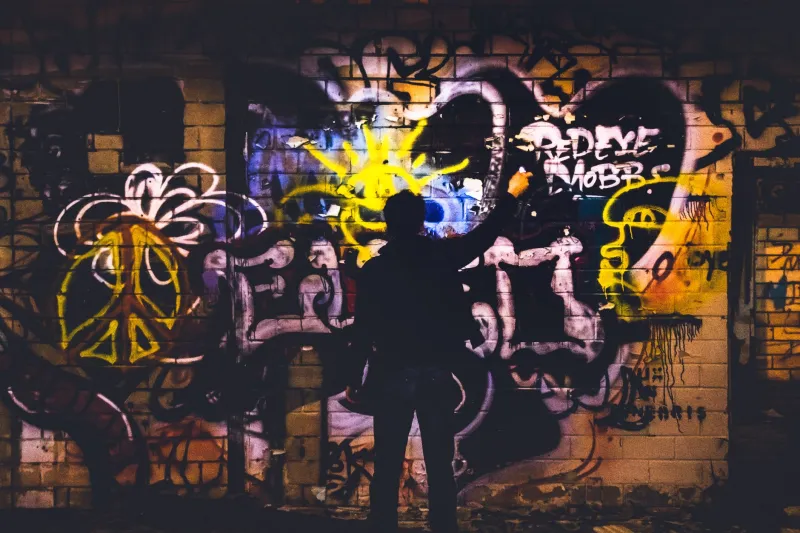
The alarm goes off at 1:45 a.m. and nobody complains. That's the first thing you notice about these people — the hours don't bother them. By the time most of us are deep in REM sleep, a crew of four or five is already loading up a van somewhere in Philadelphia's Kensington neighborhood, or pulling off the highway into a Detroit industrial corridor, or parking two blocks away from a crumbling Houston underpass they've been eyeing for six weeks.
They move fast and they move quiet. And by the time you commute past that wall on your way to work, something will have changed.
The Permission Economy and Who Gets Left Out
There's a whole infrastructure built around public art in American cities. Grants, committees, community boards, site approvals, insurance riders. A sanctioned mural can take 18 months from concept to completion. The muralists working in the pre-dawn hours don't have 18 months. More often than not, they don't have permission at all.
But that framing — permitted versus unpermitted — misses most of what's actually happening on the ground.
"We're not out here tagging someone's storefront," says a Houston-based muralist who goes by Celo and has been active for nearly a decade. "There's a whole set of unwritten rules about what walls are fair game. Abandoned buildings. Underpasses. Retaining walls along highways that the city hasn't touched in twenty years. If a wall already looks like nobody cares about it, we care about it."
That distinction matters enormously to the crews themselves. The code isn't written down anywhere, but it's transmitted — through mentorship, through watching older heads work, through the quiet social economy of the scene. You don't paint over someone else's finished piece. You don't touch walls that serve active businesses. You don't bring heat to neighborhoods that are already over-policed. These aren't suggestions. Break them and you're done.
What the City Ignores, the Crew Inherits
Detroit is an interesting case study in how this plays out. The city has lost significant population over the past few decades, which means there's no shortage of blank, forgotten surfaces. But it also means the city has made real investments in sanctioned public art — the Murals in the Market program, various neighborhood beautification initiatives, corporate-sponsored installations.
The work that gets done in the margins of all that official activity tells a different story.
A collective loosely organized around Detroit's eastside has spent the last three years painting underpasses along a stretch of road that connects two neighborhoods with almost no foot traffic and even less city investment. The work is dense, layered, and unapologetically political — portraits of labor organizers, references to the city's manufacturing history, text in Spanish and Arabic that reflects who actually lives in those blocks now.
"The city would never approve half of what we do," says one member of the crew, who asked to be identified only as Mira. "And that's not us being rebellious for the sake of it. It's just that the approval process filters out anything that might make someone on a committee uncomfortable. We don't have that filter."
What's striking is the longevity. Several pieces done by this crew five or six years ago are still intact — better preserved, in some cases, than officially commissioned murals that were painted around the same time. When you own a wall in the way these crews do, you also maintain it. Touch-ups happen. Damage gets repaired. The work stays alive because the people who made it keep coming back.
Philadelphia and the Question of Neighborhood Consent
The ethics get genuinely complicated in a city like Philadelphia, where the Mural Arts Program has spent decades building one of the largest public mural collections in the country — much of it in neighborhoods where residents were actively consulted during the process.
Do the pre-dawn crews undercut that model? Or do they fill in the spaces that even the most well-intentioned official programs miss?
A Philadelphia-based muralist named Dre, who has done both sanctioned work through formal programs and unsanctioned work on his own time, doesn't think the two are in conflict. "Mural Arts does great work. I've been part of it. But there are still walls in this city that nobody has claimed, in blocks where nobody is running a beautification initiative, where the community never got asked because nobody thought to ask. Those walls exist. I'm not going to leave them blank."
The question of neighborhood consent is real, though, and the better crews take it seriously. Celo describes a practice his Houston crew has developed over the years — spending time in a neighborhood before painting there, talking to people, paying attention to what the block actually needs visually. "Sometimes you show up thinking you're going to do this big piece and you realize what the wall actually needs is something quieter. Something that fits the street. You adjust."
That kind of attentiveness is hard to legislate and impossible to grant-fund. It comes from being embedded in the culture, not just passing through it.
When the Art World Comes Knocking
Here's where it gets thorny. Over the past decade or so, the mainstream art world has developed a serious appetite for street muralism. Gallery shows, museum acquisitions, brand collaborations, festival commissions — the pipeline from underpass to art fair is more established than it's ever been.
For the muralists who built careers in the margins, that attention is a double-edged thing.
"I've had galleries reach out," Mira says. "And I've done some of that work. But there's always this moment where you realize they want the aesthetic without the politics. They want the visual language of the street without the actual street. And that's when it stops feeling like recognition and starts feeling like extraction."
Celo is more pragmatic. "If the art world wants to pay me to do what I was already doing for free, I'm not going to turn that down. But I'm also not going to stop doing the other work. The 3 a.m. stuff is where I actually figure out what I think. The gallery stuff is just where I show people the results."
That split — between the work done for its own sake and the work done for an audience — is maybe the most honest articulation of what keeps these crews going. It's not about recognition. It's not about getting caught or not getting caught. It's about the specific, irreplaceable feeling of watching a blank wall become something, in the dark, before anyone else is awake to see it happen.
The Wall Remembers
There's a wall in North Philadelphia that's been painted over at least a dozen times in the past fifteen years. Different crews, different styles, different eras of the scene. If you know how to look at it, you can almost read the layers — see the ghost of an older piece bleeding through the newer one, catch a color from three or four paintings ago showing through a crack in the surface.
Nobody commissioned any of it. Nobody approved it. The city hasn't touched that wall in living memory.
But the wall remembers everything that's ever been put on it. And the neighborhood, whether it asked for any of this or not, has been looking at art for fifteen years.
That's not nothing. In a culture that's increasingly mediated, monetized, and optimized for engagement metrics, there's something genuinely radical about beauty that just shows up — that doesn't ask you to subscribe, share, or buy anything. It's just there. Painted by people who woke up before dawn because they had something to say and a wall that was willing to hold it.