No Stage, No Problem: The Theater Collectives Turning Parking Lots and Rooftops Into Sacred Ground
The directions arrive by text message, usually the night before. A cross street, sometimes a building number, occasionally just a neighborhood and a time. No venue name. No Eventbrite link. No review in the local alt-weekly because the local alt-weekly doesn't know it's happening. You show up or you don't, and either way the show goes on.
This is how a growing number of American theater collectives operate — not out of necessity, exactly, but out of something closer to conviction. They're not broke theater kids scraping together a production because they can't afford a black box. Many of them have MFA degrees, professional credits, industry connections. They've seen the inside of institutional theater. They left on purpose.
The Space Is the Statement
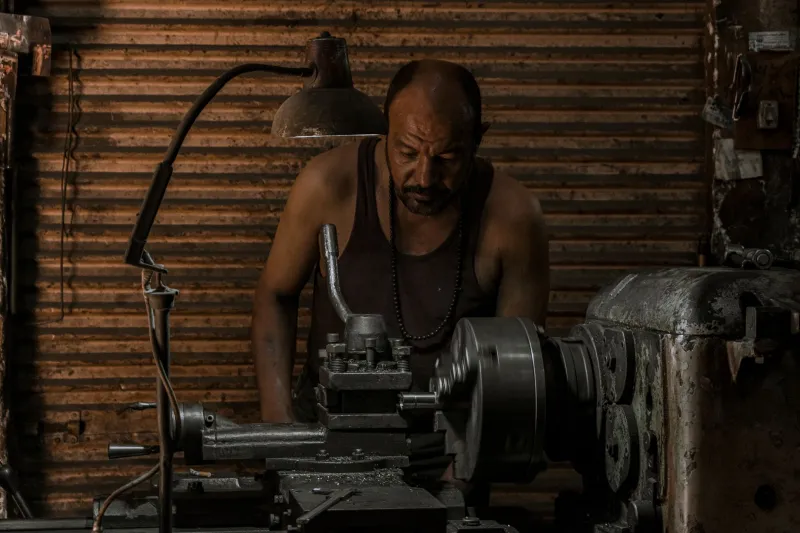
In Chicago, a collective called Hollow Ground has been staging full-length original productions in industrial spaces on the city's southwest side for the better part of four years. Their last piece — a 90-minute meditation on displacement and gentrification — played inside a former sheet metal fabrication facility in Pilsen. Folding chairs, exposed ductwork, the faint smell of machine oil that never quite left the concrete floor. Around 60 people attended each night across a three-night run. There were no reviews. There was no press release.
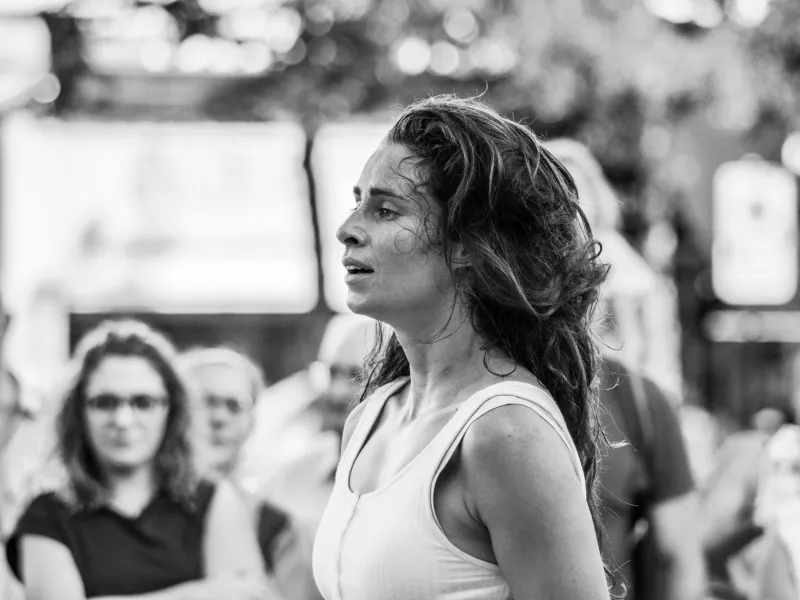
"The space does half the work for you," says one of the group's founding members, who asked to be identified only by her first name, Dara. "When you put an audience inside a building that has its own history, its own weight, they arrive differently. They're already paying attention before a single word is spoken."
That philosophy shows up in different forms across the country. In Los Angeles, a troupe called Asphalt Repertory has built a reputation — whispered, word-of-mouth, spread through group chats rather than Google — for rooftop productions in Boyle Heights and South Central. Their work tends toward the political and the visceral, staging confrontational pieces about immigration enforcement, housing instability, and the slow erasure of working-class Latino neighborhoods in a city that keeps rebranding itself for people who just arrived.
In Philadelphia, a collective operating loosely under the name Drift Theater uses vacant lots and underutilized community spaces in Kensington and Germantown, often collaborating directly with neighborhood organizations to root their productions in local stories. Their audience isn't theater-goers in the traditional sense. It's neighbors.
Why They Reject the Mainstream Pipeline
The conventional path for serious theater artists in America runs through regional theater institutions, grant applications, and the slow accumulation of professional credentials that eventually, maybe, leads to a production that gets reviewed and remembered. It's a pipeline that rewards patience and penalizes experimentation. The groups operating outside it aren't naive about what they're walking away from — they've just decided the tradeoff isn't worth it.
"Institutional theater has gatekeepers at every stage," says Marcus, a director who co-founded an Atlanta-based collective that performs in community centers, back yards, and once, memorably, a decommissioned MARTA rail car. "A grant committee decides if your work is worthy of funding. A venue decides if it fits their season. A critic decides if it deserves an audience. By the time a piece of theater has survived all of that, it's been shaped by so many outside opinions that you have to ask whose vision it actually is."
His collective sidesteps all of it. They fund productions through small donations passed at the end of performances, occasional merchandise, and the kind of community goodwill that doesn't show up in a budget spreadsheet. It's not sustainable in any conventional sense. They do it anyway.
Finding the Audience Without Advertising
The logistics of building an audience without formal publicity are genuinely strange, and the groups doing it have developed their own informal systems. Text chains. Instagram stories that disappear after 24 hours. Flyers posted in specific spots — a record shop, a taqueria, a barbershop — that function as signals to people who already know to look. Some collectives maintain email lists that feel more like membership in a secret society than a marketing newsletter.
Dara from Hollow Ground describes their audience as "self-selecting in the best possible way." The friction of finding out about a show, figuring out the location, and showing up to an unmarked building filters for people who actually want to be there. "There's no one in our audiences who wandered in because they had nothing else to do on a Tuesday," she says. "Everyone in that room made a choice."
That intentionality changes the energy of a performance in ways that are hard to quantify but easy to feel. Audiences at unconventional productions tend to be more present, more willing to sit with discomfort, more forgiving of the rough edges that come with non-traditional spaces. The absence of institutional framing — no program notes explaining what you're supposed to think, no lobby bar softening the experience — puts the work and the audience in direct contact with each other.
Serious Art in Unsanctioned Spaces
The easiest dismissal of this kind of work is that it's amateur, that the rejection of institutional validation is just a coping mechanism for people who couldn't make it through the front door. That reading collapses pretty quickly when you actually see the work. These productions are often formally ambitious, aesthetically rigorous, and socially engaged in ways that mainstream regional theater — with its subscription audiences and its donor galas — tends to avoid.
Asphalt Repertory's last rooftop production included original music composed specifically for the space, a bilingual script that moved fluidly between English and Spanish without translation, and a final scene performed with the downtown LA skyline as an unintentional backdrop. It ran four nights. Around 200 people total saw it. It left no institutional record.
That impermanence is part of the point. Theater has always been the art form that disappears — no object left behind, no artifact to collect. These collectives are leaning into that quality rather than fighting it. The performance happens, it matters to the people in the room, and then it's gone. In a cultural moment when everything is documented and archived and available for retrospective consumption, there's something genuinely radical about making work that exists only in the moment of its making.
The underground, as it turns out, has always been where the most honest theater lives.