Rewind Culture: The Stubborn Video Stores That Became the Third Places America Forgot It Needed
The Store That Shouldn't Exist
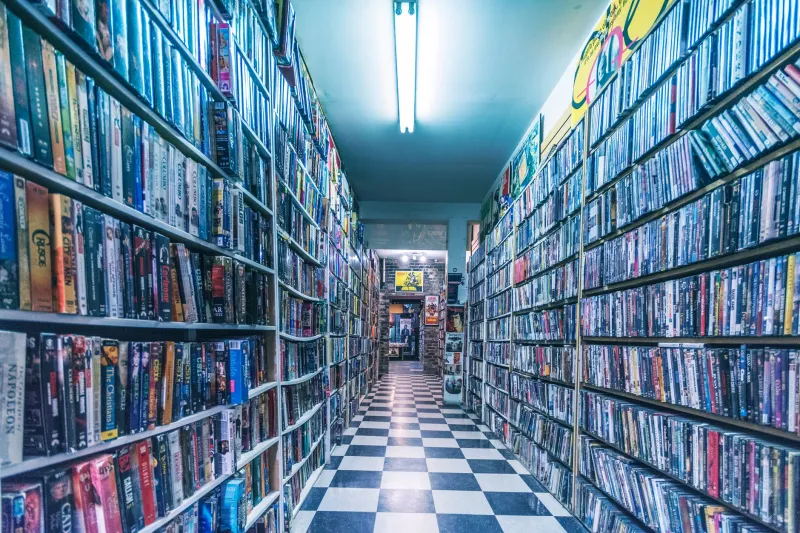
Walk into Scarecrow Video in Seattle on a Tuesday afternoon and you'll feel something shift in your chest. Maybe it's the carpet. Maybe it's the handwritten staff picks taped to the shelves at eye level. Maybe it's the guy in the corner spending twenty minutes deciding between two Taiwanese New Wave films from 1989. Whatever it is, it doesn't feel like nostalgia. It feels like now.
Scarecrow is a nonprofit, which is part of how it survived. But the survival story isn't really about business models. It's about what happens when a physical space refuses to accept that convenience is the only thing people want from their entertainment.
Across the country, a quiet cluster of independent video rental stores — some estimate fewer than a few dozen true holdouts — are still operating. Not as museum pieces. Not as ironic pop-ups. As functioning, breathing neighborhood institutions that people depend on in ways that would sound strange if you tried to explain them out loud.
What a Shelf Actually Does
Here's the thing about browsing a physical video store that nobody really talks about: it forces a kind of decision-making that streaming has completely eliminated. On Netflix, the interface nudges you. The algorithm knows what you watched last Thursday and it's already pre-loaded the next logical step. You're not choosing — you're being guided.
In a video store, you're alone with your instincts and a cardboard box.
Rob Nichols, who co-runs a small rental shop out of a converted storefront in Bloomington, Indiana, puts it plainly. "People come in stressed out, like they forgot how to pick something. And then something clicks and they come alive. That moment is the whole point."
His store carries about four thousand titles. The major streaming platforms carry tens of thousands, technically. But Nichols' four thousand are curated — argued over, organized with intention, labeled with handwritten notes that say things like "watch this if you thought Parasite was too mainstream." That selectivity is the product.
The Regulars Are the Infrastructure
Every surviving video store has a version of the same cast. There's the film student who treats the foreign section like a library archive. There's the couple in their sixties who come every Friday and have been doing so since 1994. There's the teenager who wandered in on a dare and now spends three hours there every Saturday.
At Vidiots in Los Angeles — one of the more celebrated holdouts, now operating out of a theater space in Eagle Rock — the community element is practically formalized. They host screenings, filmmaker talks, and events that turn the rental browsing experience into something closer to a cultural membership. The store is the anchor; everything else radiates out from it.
"We're not competing with streaming," says one Vidiots staffer. "We're offering something streaming structurally cannot offer, which is a place. A physical place where people who care about film run into each other."
That's the third-place argument, the one sociologists have been making for decades about the importance of spaces that are neither home nor work. Bars used to do it. Barbershops still do it. Video stores, for a specific kind of person, were always doing it — and the ones that remain have leaned all the way into that identity.
The Stuff You Can't Stream
There's a practical layer here too. A staggering amount of film and television history simply does not exist on any streaming platform. Rights are complicated, catalogs are incomplete, and the economics of licensing mean that massive swaths of cinema — regional films, exploitation titles, obscure documentaries, foreign language cinema from smaller markets — live only on physical media.
Video stores that curate deeply are, functionally, archives. The guy at Scarecrow who can hand you a VHS copy of a 1976 Filipino action film that has never been digitized is not performing nostalgia. He's providing access.
For filmmakers and researchers, this is not a small thing. For regular viewers who've hit the bottom of their streaming queues and want something genuinely surprising, it's also not small.
Why This Feels Like a Statement
There's something quietly political about choosing to rent a movie from a human being in 2024. Not in a loud, manifesto way — more like a slow refusal. These stores exist in direct opposition to the idea that convenience should win every argument. They're betting that some people, enough people, will consistently choose the experience of looking over the experience of having.
So far, they're right. Not everywhere, not at scale — but in pockets, in neighborhoods, in cities where enough people decided that the algorithm doesn't actually know what they want. The video store became a landmark not by competing with what replaced it, but by becoming the thing that nothing else could replace.
Rewind that.