Paper, Staples, and No Algorithm: Zines Are Claiming Space in the Corners of Everyday America
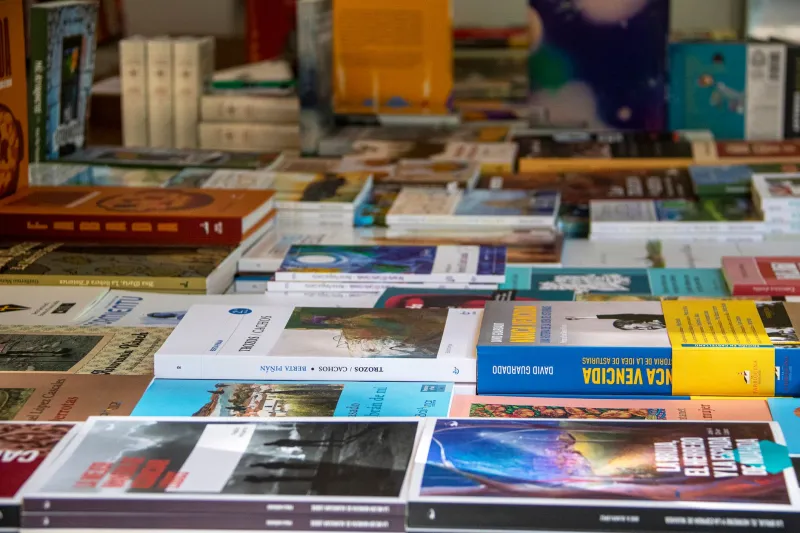
Somewhere in Detroit, between the spin cycle and the dryer, there's a wire rack holding a dozen hand-folded zines. One covers local mutual aid networks. One is a comic strip about working a double shift at a diner. One is a dense, photocopied rant about a rezoning decision that never made the local news. None of them have ISBNs. None of them have advertisers. All of them have been picked up, read, and left for the next person.
This is the zine revival. And it looks nothing like what you might expect.
Not Your MFA Zine Fair
The popular image of zine culture tends to skew toward the artsy and curated — tables at craft fairs, limited-edition risograph prints, the kind of thing that ends up on a shelf next to succulents. And that world exists, and it's fine. But the more interesting thing happening right now is somewhere else entirely.
It's in the barbershop on the north side of Houston where a stack of music-focused zines sits next to the waiting chairs, put there by the guy who cuts hair on Tuesdays and Thursdays and also happens to run a small independent label out of his garage. It's in the bodega in the South Bronx where the owner lets a rotating cast of neighborhood kids leave their publications on the counter. It's in the laundromat in Detroit's Mexicantown where a zine collective started leaving copies two years ago and never stopped because people kept asking for more.
What's happening isn't a trend. It's an infrastructure. A slow, handmade, stubbornly physical distribution network built in the spaces where working-class communities already gather — and built specifically to exist outside the reach of platforms, algorithms, and editorial approval.
Why These Spaces, Why Now
Cristina Vásquez runs Lavandería Zines, a loose collective that distributes self-published work through laundromats across three Detroit neighborhoods. She started it in 2021, during a period when, as she puts it, "everyone was online screaming and nothing was landing."
"A laundromat is one of the last places where people genuinely have nothing to do," she says. "You're there for forty-five minutes. You're not going anywhere. And if something is sitting right there, something that feels like it was made by a real person — you're going to pick it up."
That captive-audience logic is part of it. But it goes deeper than that. Laundromats, barbershops, and bodegas are community anchors in a way that most retail spaces stopped being a long time ago. They're where you see your neighbors. Where conversations happen organically. Where information — real, local, contextual information — has always traveled by word of mouth.
Slipping a zine into that ecosystem isn't just a distribution strategy. It's a political act. It says: this content belongs here, with these people, not behind a paywall or filtered through a recommendation engine.
"I don't want my work to find the right audience," says Darius Okafor, who publishes a Houston-based music zine called Frequency out of his apartment and distributes it through four barbershops in his neighborhood. "I want it to find whoever's sitting in that chair. That's the whole point."
What's Actually Getting Published
The content of these zines is as varied as the spaces they inhabit, but certain themes keep surfacing. Local politics — the kind that never makes regional news, much less national. Music scenes that exist entirely below the radar of music media. Histories of neighborhoods that are changing fast and whose stories aren't being written down anywhere else. Personal essays. Rants. Comics. Poetry that doesn't care if you like poetry.
In the Bronx, a collective called Bodega Press has been producing a monthly zine for three years that covers everything from local restaurant closures to profiles of community organizers to a recurring column written by a seventy-year-old Dominican woman who has lived in the same building since 1978. The circulation is maybe 300 copies a month. The readership — people who pick it up, pass it along, photograph pages and text them to friends — is impossible to measure and, by all accounts, significantly larger.
"We're not trying to go viral," says one of Bodega Press's founders, who asked to remain anonymous. "Viral is someone else's metric. We're trying to be present. In the room. On the counter. That's a different thing."
The Business Owners Who Make It Possible
None of this works without the shop owners and business operators who agree to host these publications — and their motivations are worth understanding.
Ramon Guerrero has owned a barbershop in Houston's East End for sixteen years. He started letting Darius leave copies of Frequency about eighteen months ago and has since expanded to hosting three other local zines. His reasoning is straightforward: "My customers come in and they see something new, something that somebody in the neighborhood made, and it starts a conversation. That's good for my business. But also — it just feels right. Like this is what a barbershop is supposed to be."
That sense of cultural responsibility comes up repeatedly among the business owners participating in this informal network. They're not doing it for foot traffic. They're doing it because they understand that their physical space has a role in the community that goes beyond the transaction.
For laundromat owner Jin Park in Detroit, hosting zines was a natural extension of how he already thought about his space. "People come here stressed. They don't want to be here. If there's something interesting to read — something that feels like it was made by someone who actually gives a damn — that changes the energy of the place."
What It Signals
Cultural critics who track DIY publishing have been watching this shift with a mix of excitement and careful skepticism. The question isn't whether the zine revival is real — it clearly is. The question is what it means.
For some, it's a direct response to digital media fatigue: a generation that grew up online, watched every platform enshittify in real time, and is now reaching for something that can't be taken down, demonetized, or algorithmically buried. Print doesn't get a shadowban. A stapled piece of paper on a barbershop counter doesn't need to perform for engagement metrics.
For others, it's something more specifically political — a reclaiming of local information infrastructure at a moment when local journalism has largely collapsed and community knowledge is increasingly mediated through platforms that have no stake in the communities themselves.
Both things are probably true. And both things point toward the same conclusion: the underground doesn't wait for permission. It finds a rack in a laundromat, leaves fifty copies, and comes back next month.
The revolution, as it turns out, is hand-stapled. And it's right there next to the fabric softener.