Shelf Life: The Underground Zine Libraries Archiving What the Internet Already Forgot
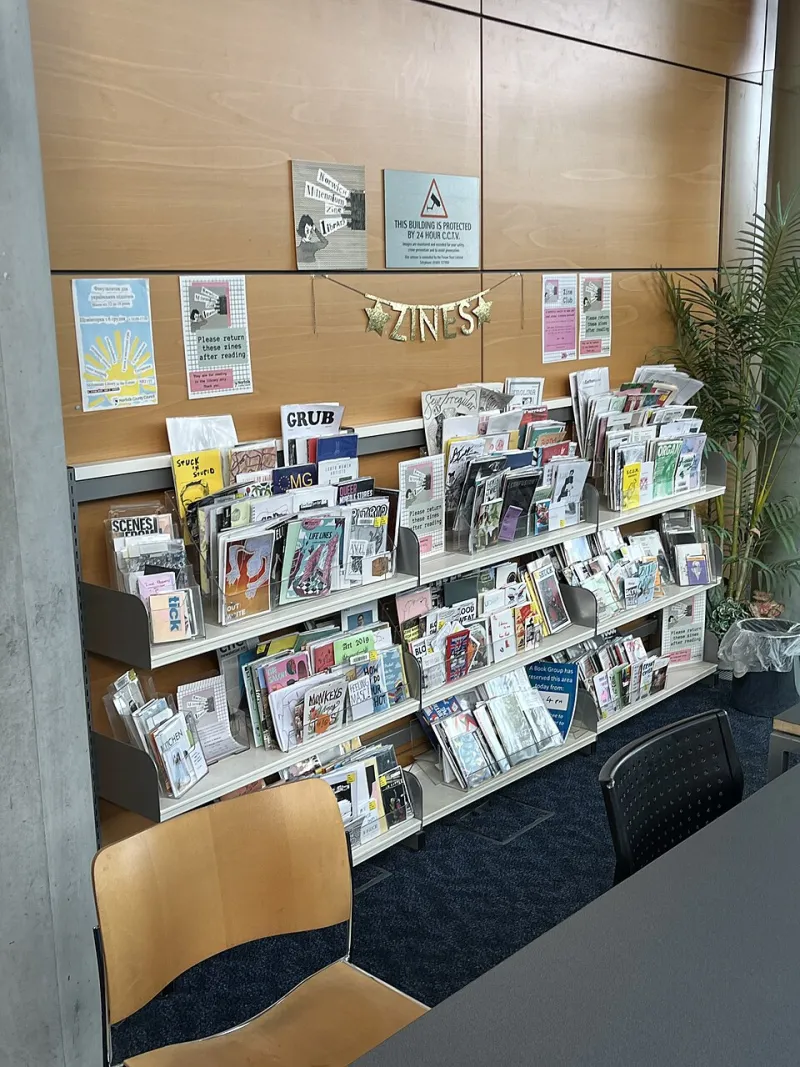
Photo: Rhagfyr, CC0, via Wikimedia Commons
The link is dead. The Tumblr is gone. The Blogspot hasn't loaded since 2014. And the print run was 200 copies, hand-stapled on a Tuesday night in someone's Cincinnati basement, distributed at a show that maybe 40 people attended. If nobody saved one, that thing — that entire moment of culture — is just gone.
That's the quiet emergency that a loose, informal network of independent zine librarians across the US has decided to do something about. Not with grants. Not with digitization initiatives. With shelves, filing systems, and a stubborn refusal to let ephemeral culture stay ephemeral.
The Archive Nobody Asked For (But Everyone Needed)
Walk into the right storefront in a mid-sized American city and you might stumble into something that doesn't have a clean name. It's not quite a library. It's not a museum. It's not a record store, though the vibe rhymes. It's a collection — sometimes thousands of zines deep — organized by someone who simply decided that these things mattered and that nobody else was going to save them.
In Philadelphia, there's a collective operating out of a shared art space that has been quietly accumulating DIY publications since the mid-2000s. Their holdings cover everything from hardcore punk show flyers stapled into crude newsletters to dense, xeroxed theory zines from queer organizing circles that no longer exist. There's no official catalog. Access happens through relationships. You find out about it because someone who trusts you tells someone who trusts you.
That model — trust-based, community-gated, deeply informal — turns out to be exactly what makes these archives work. Mainstream institutions acquire zines too, sometimes. But when a university library takes in a zine collection, it often disappears into a special collections room that requires appointments, white gloves, and a research affiliation. The underground libraries tend to just... let you read the thing.
Why Paper Survives What Pixels Don't
There's a particular kind of digital rot that nobody talks about enough. It's not dramatic. It doesn't look like anything. A website just stops resolving. A domain expires. A platform shuts down and takes everything with it. Geocities. MySpace. Vine. The internet has a memory problem, and it's getting worse.
Zines, weirdly, don't have that problem. A badly photocopied, saddle-stitched newsletter from 1993 about the DIY skateboarding scene in Tucson will still be completely legible in 2050, assuming someone bothered to keep it dry. Paper is low-tech in the best possible way. It doesn't require software. It doesn't need a subscription. It just sits there, being readable.
The people building these libraries understand this intuitively. Many of them came up through punk, zine-making, or activist communities where the physical object was always the point. The zine wasn't a delivery mechanism for content — it was the content, including the smudged ink, the hand-drawn margins, the staple that's slightly off-center because someone was rushing.
What Gets Saved and What Doesn't
Here's where it gets complicated. These collections aren't neutral. They reflect the tastes, networks, and blind spots of whoever built them. A collector in Chicago with deep roots in the city's Black punk scene is going to have a very different archive than a collector in Austin whose entry point was anarchist organizing in the early 2000s. Neither is wrong. Both are incomplete.
That's actually one of the arguments for having more of these libraries, not fewer. No single institution can capture the full sprawl of American underground culture. But a distributed network of passionate, opinionated collectors — each building something shaped by their own experience — gets you closer to a real picture than any centralized effort could.
Some collectors are explicit about their curatorial politics. They're not trying to save everything. They're trying to save the stuff that institutional archives actively overlooked: trans zines from the 90s, labor organizing newsletters from meatpacking towns, the output of Black feminist collectives that never got a retrospective. The mainstream archive's gaps are their acquisitions list.
The Lending Problem
Most of these operations don't have the budget to duplicate everything. Which means they face a real tension: do you lend things out and risk losing them, or do you keep them safe and make them inaccessible?
Different collectors have landed in different places. Some run strict reference-only policies — you can read in the space, but nothing leaves. Others operate on pure honor-system lending, which works until it doesn't. A few have developed informal borrowing networks where zines circulate between trusted collectors in different cities, essentially creating a traveling exhibition that nobody officially organized.
What almost none of them have is money. These are not funded operations. They're passion projects running on personal income, occasional donations, and the willingness of a community to show up and help shelve things. When a collector talks about what they do, the word "sustainable" rarely comes up. They're not building for sustainability. They're building because the alternative is losing it.
The Next Generation Problem
The older collectors — the ones who started pulling zines off distro tables in the 90s — are starting to think about succession. What happens to a 4,000-zine collection when the person who built it can't maintain it anymore? The institutional options are limited and often unsatisfying. The community options are still being invented.
Some collectors are actively mentoring younger archivists, passing on not just the physical materials but the knowledge of what things are, where they came from, why they matter. That oral history layer is as important as the paper itself. A zine without context is just a weird old pamphlet. A zine with its story attached is a primary source.
There's a generation of people in their 20s who are coming to zine culture through a different door — through social media aesthetics, through risograph printing, through a vague sense that physical media is more real than digital. Some of them are becoming collectors. Some of them are building their own archives. The thread is continuing, even if it looks different.
Why It Matters
American mainstream culture has a short memory and a strong preference for whatever's profitable. The underground has always kept its own records because nobody else would. These zine libraries are the latest version of that impulse — people deciding that the history of their communities is worth the shelf space, the storage unit fees, the weekend afternoons spent organizing.
The internet told us that everything would be preserved forever, that nothing could be lost. That turned out to be spectacularly wrong. The people building these collections knew it all along.