The Feed Nobody Owns: How Corkboards and Hand-Torn Flyers Are Quietly Running America's Realest Social Network
The Feed Nobody Owns: How Corkboards and Hand-Torn Flyers Are Quietly Running America's Realest Social Network
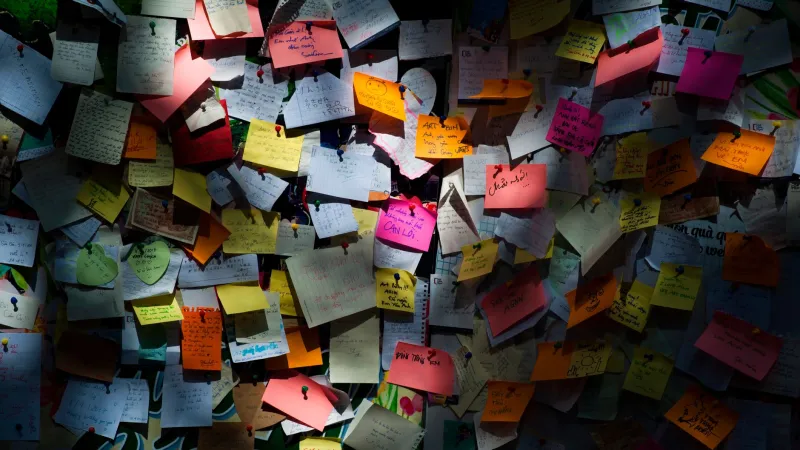
Somewhere between the dryers and the folding tables at a laundromat on the east side of Cleveland, there's a corkboard that's been running longer than most social media platforms have existed. It's got maybe forty items pinned to it on any given day — a flyer for a quinceañera DJ, a hand-lettered notice about a missing orange tabby, a card for a woman who does alterations out of her apartment two blocks over, a band looking for a bassist who "knows their Meters." No algorithm curated it. Nobody boosted it with ad spend. It just exists, and it works.
This is the bulletin board network. It doesn't have a name. It doesn't have a headquarters. It's a loose, uncoordinated, impossibly resilient web of physical postings spread across the unglamorous interiors of American daily life — and it might be the most functional hyperlocal communication system still operating at scale.
The Curators Who Don't Know They're Curators
Ask Darnell, who's owned a barbershop in West Philadelphia for going on nineteen years, whether he thinks of himself as a community curator, and he'll probably laugh at you. But then he'll tell you about the last three things he personally pinned to his window board: a flyer for a neighborhood cleanup, a notice from a woman looking for a part-time caregiver for her mother, and a show announcement from a local gospel group he's been following since they were teenagers. He checks the board every morning. He pulls stuff that's expired or looks like spam. He makes judgment calls about what stays.
"I know what this neighborhood needs," he says. "I'm not gonna put up some random thing if I don't know who it's coming from."
That editorial instinct — informal, uncompensated, deeply local — is what separates a good board from a cluttered mess. The best ones are managed by people who've been embedded in a place long enough to have a feel for what the community actually wants to know. Building supers. Bodega owners. The woman who runs the community center front desk. They're not doing it for recognition. They're doing it because it's just part of how the place functions.
What a Flyer Can Do That a Post Can't
There's something about the physicality of a hand-written flyer that changes the transaction. You had to make it. You had to print it or write it. You had to show up somewhere and put it on a wall. That friction is a feature, not a bug — it filters out the noise and signals genuine intent in a way that a quick post to a neighborhood Facebook group never quite manages.
Tear-off tabs are maybe the purest expression of this. That little fringe of phone numbers at the bottom of a flyer is one of the most elegantly low-tech UX designs in history. You don't need a phone. You don't need an account. You just grab the tab, put it in your pocket, and make the call when you're ready. The interaction is private, direct, and leaves no data trail. For a lot of people — especially in communities with complicated relationships to surveillance and data collection — that matters enormously.
Bands have found their missing members this way for decades. Activists have built coalitions. People have found housing, childcare, Spanish lessons, grief support groups, and pickup basketball games. None of it required a platform. None of it required anyone's permission.
The Boards That Became Institutions
In certain neighborhoods, specific boards have developed enough history that they function almost like local institutions. There's a corkboard outside a natural foods co-op in Asheville that's been a known gathering point for the city's radical left since at least the early nineties — people who need to find each other still know to look there first. A hardware store in Chicago's Pilsen neighborhood has a board that's become an informal hub for the local arts scene, with show flyers and studio sublet notices mixing freely with plumbing repair cards.
These boards accumulate a kind of community memory that digital platforms can't replicate. An old flyer left up too long becomes an artifact. A series of postings from the same organization traces a history. The physical layering of paper over paper, thumbtack over thumbtack, is a record of what a neighborhood cared about and when.
That's not nothing. In an era when digital platforms can delete accounts, change algorithms, or simply shut down and take years of community organizing with them, there's something genuinely radical about a communication system that can't be deplatformed because it was never on a platform to begin with.
Who's Actually Using Them
The assumption that bulletin boards are a relic used only by people who don't own smartphones is wrong, and it's worth saying clearly. Walk into any laundromat in a college town and you'll see undergrads photographing flyers with their iPhones. The boards function as an entry point — a physical discovery layer that then routes people into whatever digital follow-up makes sense. QR codes have started appearing on hand-drawn flyers. Instagram handles sit alongside phone numbers. The analog and digital aren't competing here; they're collaborating.
Where the boards really shine, though, is in communities where digital access is uneven or where trust in tech platforms is low. Immigrant communities. Low-income neighborhoods. Places where people still do most of their socializing in physical space. For these communities, the corkboard isn't a charming throwback — it's genuinely the most accessible and reliable communication tool available.
Keeping the Feed Alive
The threats to this network are real but slow-moving. Businesses close. Landlords renovate and remove the boards as part of a cleanup that's usually code for something else. Gentrification has a way of erasing the informal infrastructure of a neighborhood long before it erases the neighborhood itself — the bulletin board goes down around the same time the longtime tenants start getting pushed out.
But the network is more resilient than it looks. New boards appear. Community organizations maintain their own. Churches, libraries, and community centers hold the line even when commercial spaces turn over. And there's a new generation of people — younger, often deliberately anti-algorithm in their orientation — who are actively choosing to post on physical boards as a kind of political act. Putting something on paper and walking it somewhere is a statement about where you think community actually lives.
Darnell's window board in West Philly isn't going anywhere. He'll tell you that himself. "Long as I'm here, the board's here," he says. "People need to know what's going on. That's not gonna stop being true."
Neither is the board.