Rolling Up Unannounced: The Bookmobile Crews Delivering Culture to the Places Google Maps Forgot
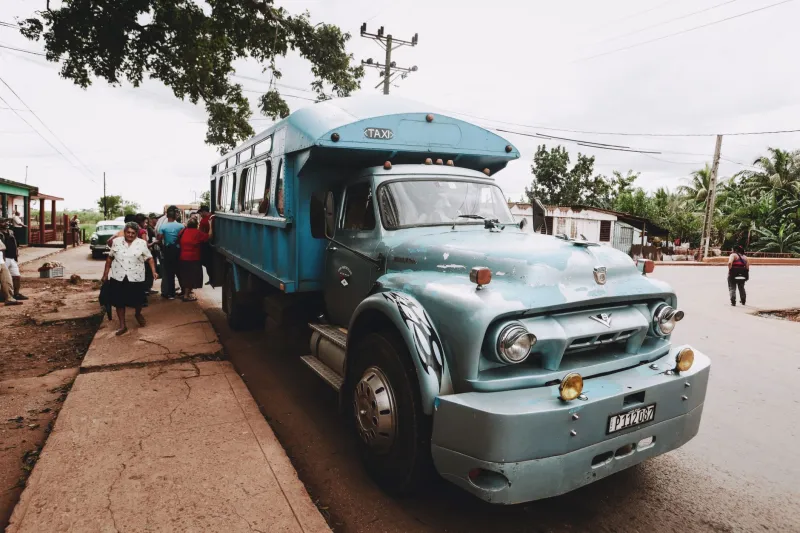
There's a particular sound that a handful of kids in a migrant worker camp in the San Joaquin Valley have learned to recognize. It's somewhere between a diesel rattle and a wheeze — the sound of a converted school bus with a hand-painted mural down its side pulling off a county road and onto the gravel. No announcement. No app notification. Just the bus, right on schedule, whether the schedule was ever written down or not.
This is what public service looks like when it stops waiting for people to walk through the door.
The Original Radical Idea
Bookmobiles aren't new. The first one in America rolled out of Washington County, Maryland in 1905 — a horse-drawn wagon loaded with books for farming communities that couldn't get to town. For most of the twentieth century, they were a fixture of rural life, a practical solution to a geographic problem. Then budgets got cut, roads got worse, and the digital revolution convinced enough administrators that the internet would handle it from here.
It didn't handle it.
Today, roughly 35 million Americans live more than ten miles from a public library. In states like Wyoming, Montana, and the rural stretches of the Deep South, that number climbs higher. For communities built around agricultural labor, for elderly residents who no longer drive, for kids in trailer parks where the nearest branch closed before they were born — the gap between them and a book is not a WiFi password. It's a car, gas money, and time nobody has.
So the bookmobile came back. Scrappier this time. Weirder. Better.
What They're Actually Carrying Now
Ask anyone running a modern bookmobile what's on board and you'll get a list that would confuse a county librarian from 1975. Yes, there are books — paperback fiction, bilingual children's titles, local history, graphic novels that don't get stocked anywhere near these communities. But pull open the side panels on some of these rigs and you'll find seed libraries, where residents can borrow heirloom vegetable varieties and return seeds from their harvest at the end of the season. You'll find crates of vinyl records available for checkout. Zine collections. Board games. Fishing licenses and voter registration forms.
And in some stops, quietly, without fanfare: naloxone kits, clean syringes, fentanyl test strips.
That last part matters. In communities where the opioid crisis arrived before any treatment infrastructure did, and where shame still keeps people from walking into a clinic, a bookmobile that pulls up without judgment is sometimes the only point of contact between a person and a resource that might keep them alive. Nobody's making a big announcement about it. The people who need to know, know.
"We're not a library that does outreach," one volunteer coordinator in Appalachian Kentucky explained. "We're just trying to be useful to wherever we park."
The People Running These Things
The crews are a specific kind of person. Retired librarians who couldn't stay retired. Grad school dropouts who traded a thesis for a CDL license. Organizers who came up through food justice work and realized that information scarcity and food scarcity live at the same addresses. A surprising number of them are in their twenties, running operations on donated vans and GoFundMe budgets, building routes based on conversations rather than census data.
In New Mexico, one organizer spent six months driving a loop through three counties before she started carrying books at all. She was just showing up, talking to people, figuring out what the actual ask was. The books came later. The seed library came after that. The harm reduction supplies came when someone told her directly what was needed.
That's the methodology, if you want to call it one: show up consistently, listen harder than you talk, and let the community tell you what belongs on the shelves.
It's not a model that scales on a pitch deck. It's not designed to.
What Gets Lost When the Wheels Stop
The bookmobiles that shut down in the eighties and nineties didn't just take books away. They took a weekly anchor point. A reason to walk outside. A reliable face. In communities where institutional trust has been eroded by decades of promises that didn't show up, the act of showing up — every Tuesday, same time, same gravel lot behind the dollar store — carries weight that's hard to quantify but impossible to miss.
Kids who grow up with a bookmobile stop don't just read more. They have a reference point for what it means when a public institution actually delivers on what it said it would do. That's not a small thing in places where that experience is genuinely rare.
And for the adults, especially the elders who remember when these buses ran regularly, there's something else happening. A kind of repair. Like the culture acknowledging that yes, you were left out, and no, we're not going to pretend the internet fixed it.
Underground by Necessity, Not Aesthetic
None of this is underground by choice. These operations would love more funding, more visibility, more buses. But operating on the margins has shaped them in ways that make them more functional, not less. Without the bureaucracy of a traditional library system, a bookmobile can add naloxone to its inventory without a board vote. It can stock zines by local teenagers alongside published novels. It can change its route based on where a seasonal labor camp just set up.
Flexibility is the whole point. The communities they serve are not static. Neither are the needs.
There are networks now — loose ones, the way underground things usually organize — where bookmobile operators share routes, swap collections, and help each other source supplies. A van breaks down in rural Texas and someone two states over knows a mechanic who'll do the work at cost. A collection in Oregon has fifty extra copies of a bilingual title that a crew in Florida desperately needs. It moves.
The Ask Is Simple
If you're in a city with a library on every other block, this whole thing might read like a curiosity. A charming anachronism. It isn't. It's a live argument about what public infrastructure is for and who it's actually built to serve.
The bookmobile crews aren't waiting for a policy change. They already got in the bus. They're already on the road. What they need — what they've always needed — is for the people who do have resources, who do have reach, to treat this work like it matters.
Because somewhere right now, a diesel engine is rattling down a county road toward a gravel lot where a handful of kids are already waiting. And whatever's on those shelves today is going to be the most honest version of public service any of them have ever seen.
That's worth showing up for.