Press Hard, Print Loud: The Letterpress Shops Anchoring America's Forgotten Downtowns
Press Hard, Print Loud: The Letterpress Shops Anchoring America's Forgotten Downtowns
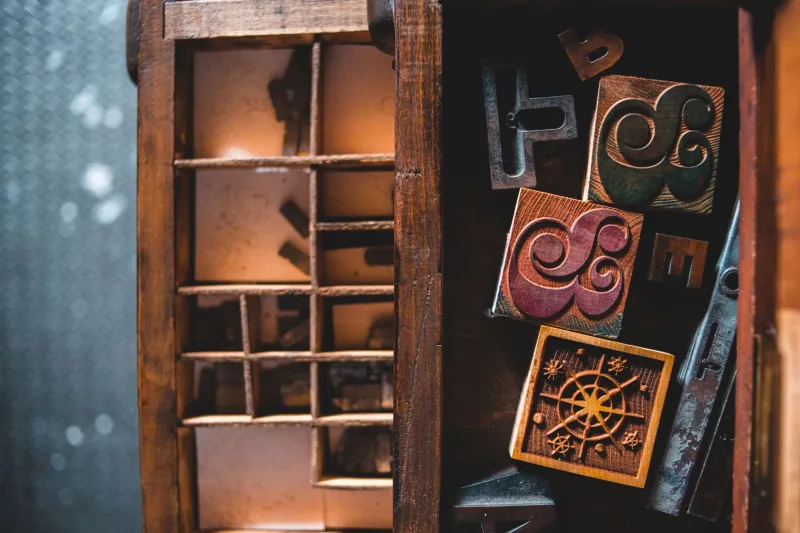
The machine weighs about as much as a small car. It was manufactured sometime around 1923, and it has no USB port, no Wi-Fi connectivity, and absolutely zero interest in your content calendar. When it runs, it runs loud — a rhythmic, mechanical thud that rattles the windows and vibrates up through the floorboards into your chest. And in a narrow storefront on a half-empty block in Youngstown, Ohio, that sound is the most alive thing on the street.
This is a letterpress shop. And if you haven't heard of it, that's kind of the whole point.
A 500-Year-Old Technology That Refuses to Retire
Letterpress printing predates the United States by about three centuries. Gutenberg's press, movable type, the whole deal — this is the technology that launched the Reformation, circulated revolutionary pamphlets, and built the newspaper industry from the ground up. By the mid-20th century, offset lithography had largely pushed it out of commercial printing. Most of the old Chandler & Price presses, the Vandercooks, the Heidelbergs got scrapped or shoved into storage. The craft nearly vanished entirely.
Nearly.
What happened instead was a slow, stubborn resurrection — not in Silicon Valley, not in the design capitals, but in the kinds of places economic development reports describe as "transitional" and then quietly forget about. Youngstown. Scranton. Gary, Indiana. East St. Louis. Smaller cities where cheap rent on big old storefronts made it possible for someone with a 1,500-pound antique press and a serious obsession to actually set up shop.
These printers didn't arrive with venture funding or a brand strategy. Most of them came in sideways — a graphic designer who inherited a press from a retiring printer, a bookbinder who fell down a rabbit hole at an estate sale, a union organizer who wanted to make broadsides the way they used to get made. They figured it out as they went, learning from each other, from old manuals, from the machines themselves.
Not a Hobby. Not a Brand. Something Else.
Here's what a lot of coverage of the letterpress revival gets wrong: it frames the whole thing as artisanal nostalgia, a twee reaction to digital overwhelm, something adjacent to sourdough and vinyl records. That framing misses the actual texture of what's happening in these shops.
Take Meridian Press out of Flint, Michigan, run by a woman named Deandra who spent a decade working in community organizing before she started printing. She does wedding invitations, sure — that's what pays the lights. But she also prints voting rights literature for local advocacy groups, hand-numbered art prints for artists who can't afford gallery representation, and every year around the anniversary of the Flint water crisis, she runs a limited edition broadside series that documents what the city has been through. None of that ends up on a mood board. None of it gets licensed to a hotel lobby.
"People come in here and they want to touch things," she says. "They want to see it happen in front of them. They want to know that a human being made the thing they're holding. That's not nostalgia. That's just — people needing to feel like something is real."
That tension between the physical and the ephemeral is everywhere in these shops. The process itself is inherently slow: you set the type or prepare the plate, you mix the ink by hand, you run test prints, you adjust the impression, you run the actual job. A short-run wedding invitation order that a digital printer would spit out in twenty minutes might take a full day. And that slowness is not a bug. It's the entire argument.
The Shop as Gathering Place
What's interesting about the best of these letterpress operations is that they've evolved into something beyond print shops. They're functioning as cultural infrastructure in communities that have been systematically stripped of it.
In Bethlehem, Pennsylvania, a collective called Ironbound Press runs open studio nights twice a month where anyone can come in, learn to set type, and pull a print of whatever they want. Teenagers from the neighborhood show up alongside retired steelworkers and art school graduates. The prints they make range from band logos to family names in old Slovak to straight-up political slogans. The press doesn't curate. It just runs.
In East Nashville — which has been gentrifying fast enough to give you whiplash — a shop called Anchor & Rule has become a kind of unofficial archive for the neighborhood's pre-renovation identity. They've reprinted old menus from restaurants that no longer exist, reproduced signage from shuttered Black-owned businesses, and worked with longtime residents to document the neighborhood's history in printed form before the wrecking ball and the condo developers finish the job.
These are not passive acts. Printing something is a declaration that it matters enough to make permanent. In communities where the mainstream economy has made clear that their history, their culture, and their continued existence are optional, that declaration lands differently.
The Ink-Stained Network
Across the country, these shops are loosely connected — through online forums, through annual gatherings like the Wayzgoose festivals that celebrate printing heritage, through the informal economy of trading type drawers and swapping press parts. It's not an organization. It doesn't have a manifesto. But there's a shared sensibility: the belief that making things slowly and physically and with your hands is not a retreat from the present but a form of engagement with it.
The machines themselves carry history. A press that printed union literature in 1930s Chicago might now be printing zines in Detroit. A Vandercook that spent decades in a university print lab might end up in a garage in Albuquerque, running art prints for an Indigenous artist collective. The lineage matters to the people running these shops. They're not just operators. They're stewards.
Why It Hits Different Right Now
There's something about this moment that makes the letterpress argument feel urgent in a way it maybe didn't ten years ago. We are drowning in content — frictionless, infinitely reproducible, algorithmically optimized content that exists to be consumed and forgotten. The idea of a process that demands time, skill, physical presence, and leaves a literal impression on the material it touches is almost radical by contrast.
And the communities where these shops are taking root are communities that have been told, over and over, that the future is somewhere else — that the jobs, the culture, the relevance, all of it is happening in cities that aren't theirs. A letterpress shop that stays, that builds something local and tangible and impossible to download, is a small but genuine counter-argument to that narrative.
The press is loud. It smells like ink and machine oil. It takes all day to do what a computer does in seconds. And in a 100-year-old storefront on a block that the economy forgot, it is absolutely, unmistakably alive.