Two Colors, One Drum, Zero Algorithm: How Riso Printers Are Building Empires From the Basement Up
Two Colors, One Drum, One Zero Algorithm: How Riso Printers Are Building Empires From the Basement Up
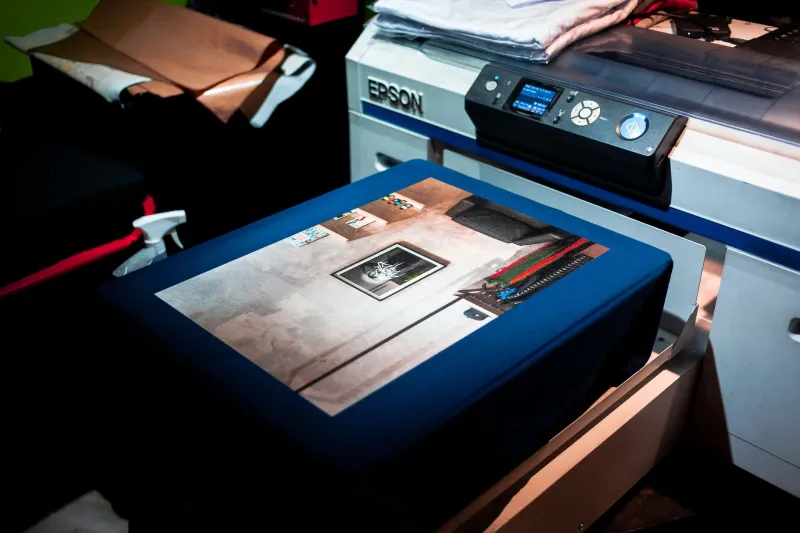
Somewhere in a converted garage in East Nashville, a machine that looks like a rejected office copier from 1994 is doing something that feels quietly radical. It's laying down soy-based ink in a shade called fluorescent pink onto a sheet of cream cardstock, slightly off from where the previous color landed — and the person running it is not fixing it. She's smiling.
That misalignment? That's the whole point.
Risograph printing has been around since the '80s, invented by a Japanese company called Riso Kagaku to help schools and churches crank out cheap, fast copies. For decades it sat in the background, unremarkable. Then, somewhere around the early 2010s, a specific type of person — the kind who haunts record shops on weekday afternoons and reads poetry collections they found wedged behind a coffee counter — discovered what the machine could actually do. And now it's everywhere you're not quite looking.
The Machine Nobody Was Supposed to Care About
A riso printer works one color at a time. You load a drum inked in, say, teal. You run your paper through. You swap the drum for one inked in red orange. You run the same paper through again. The colors overlap, bleed into each other slightly, and never quite line up the way digital printing would force them to. The result looks like something between a silkscreen print and a vintage mimeograph — textured, warm, and completely impossible to replicate on a screen with any accuracy.
That last part is not a bug. It's the entire pitch.
"The whole reason I got into this is because I was tired of making things that looked exactly the same on a phone as they did in person," says Marcus, who runs a small riso operation out of a spare bedroom in Pilsen, Chicago, under the name Slow Ink Press. He prints runs of 75 to 200 copies of artist books, poetry chapbooks, and what he calls "visual essays" — things that don't fit neatly into any publishing category and therefore have no business being on Amazon. "When someone holds one of our books, the ink is raised slightly off the page. You can feel it. That doesn't exist in a JPEG."
Marcus is not alone. From Portland to Philly, from Albuquerque to Atlanta, a loose, informal network of riso printers has been quietly building what amounts to a parallel publishing infrastructure — one that operates almost entirely outside the systems that dominate how creative work moves through culture right now.
Ink Cartridges as Currency
Riso drums — the ink-loaded cylinders that make the whole process work — are expensive, hard to find, and traded within this community with the same seriousness that record collectors apply to original pressings. A fluorescent orange drum in good condition can run $150 or more. Certain colors, like the coveted gold and mint, get talked about in group chats like rare commodities.
Because the machines themselves are often sourced secondhand — from school districts upgrading their copiers, from churches clearing storage rooms — the community has developed its own repair culture too. There are Discord servers and Signal threads where people troubleshoot ink feed problems at midnight. There are printers who've become known less for what they make than for their ability to keep aging machines alive.
"I've got a riso that's probably twenty years old," says Danielle, who operates Ditto Ghost out of a shared studio space in Baltimore. "I know every sound it makes. I know when it's about to jam before it jams. We have a relationship."
Danielle distributes her runs — mostly collaborative projects with local poets and illustrators — through a handful of record shops, two independent bookstores, and a rotating cast of coffee shops that keep a small stack near the register. None of it is sold online. You have to physically be in a place where it exists to find it.
Scarcity as Aesthetic, Scarcity as Statement
This is where the riso world gets philosophically interesting. In a moment where the defining anxiety of creative culture is infinite content — the feed that never ends, the playlist that never stops, the gallery that never closes — these printers are making a deliberate choice to produce things that can run out.
A print run of 100 copies means 100 people can have it. When those are gone, they're gone. There's no reprint file sitting in the cloud. The negative space that creates — the knowledge that a thing is finite — gives each copy a weight that digital work structurally cannot carry.
"I think people are genuinely hungry for that," says Marcus. "Not in a nostalgic way, not in a 'vinyl is warmer' way. In a way where they just want to hold something that isn't going to exist forever. Something that had to be made slowly and can actually disappear."
The aesthetic that's emerged from this community reflects that philosophy at every level. Riso work tends toward bold, limited color palettes — because you're literally limited to however many drums you can afford and swap. Compositions lean into the medium's tendency toward grain and texture rather than fighting it. Mistakes get incorporated. A color that floods slightly past its border becomes a design element. Registration drift becomes rhythm.
Distribution That Happens in Person or Not at All
If you want to find riso work, you have to go looking in the right physical places. That's intentional. Most of the printers operating in this space have made a conscious decision not to build Shopify stores or maintain consistent Instagram presences. Some have accounts, but they post irregularly, almost reluctantly — more to document than to market.
The distribution model is almost aggressively local. Copies move through record shops, art supply stores, community centers, and zine fests. In cities like Chicago, LA, and New York, there are now small riso-specific fairs where printers set up tables and sell directly to people who sought them out. In smaller cities, a single coffee shop might be the only place within a hundred miles where you can find this work.
"I like that it requires something from the person who wants it," says Danielle. "You have to know to look. You have to show up somewhere. That filters in the right people."
Why This Matters Right Now
It would be easy to write riso printing off as another boutique aesthetic trend — the kind of thing that gets a New York Times Style section treatment and then gets absorbed into the mainstream within eighteen months. But something about the infrastructure these printers are building feels more durable than that.
They're not trying to scale. They're not angling for a licensing deal or a brand partnership. They're building small, self-sustaining publishing operations that answer to nobody, distribute through community trust, and make things that are genuinely hard to commodify at volume.
In a cultural moment defined by the race to reach the most people as fast as possible, choosing to make 75 copies of something beautiful and let them find their way into 75 pairs of hands feels less like a hobby and more like a position.
The machine hums. The drum rotates. The ink lands slightly off from where it was supposed to.
Perfect.