Eight Ball After Hours: The Last Pool Halls Running on Cash, Chalk, and Pure Community
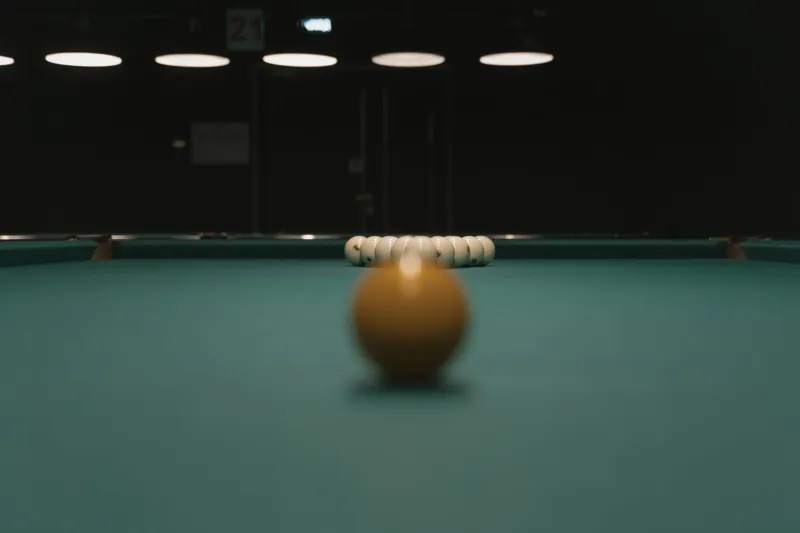
The door doesn't have a sign. Sometimes it has a number, sometimes just a scuff mark at knee height from years of people nudging it open with a boot. You walk down a flight of stairs, maybe two, and then the light changes — green overhead, warm and low, the kind that makes everyone look like they belong in a photograph. Tables stretch out in rows. The crack of a break echoes off the walls. Somebody laughs at the far end of the room. You've found it.
Across the US, in cities that don't always make the cultural conversation — and in a few that do — independent pool halls are holding on. Not barely. Holding on with intention, with regulars who've been coming for twenty years, with owners who've turned down buyouts and zoning pressure and the slow creep of condo development. These places exist in a category that doesn't have a clean name. They're not bars, not exactly. Not clubs. Not the kind of "experience" that gets written up in lifestyle guides. They are, in the most honest sense, third places — and they might be the last ones left that nobody's tried to monetize into something unrecognizable.
The Room Has Its Own Grammar
Walk into a place like Cue's on the east side of Detroit on a Thursday night and you learn quickly that there's an etiquette operating underneath the surface. Nobody explains it. You pick it up by watching. You don't chalk your cue while someone else is shooting. You don't lean on a table that's in play. You settle your tab in cash. You don't ask someone what they do for work unless they bring it up first.
This unspoken code is part of what makes these rooms function. Marcus, who's been running a hall in the Tremé neighborhood of New Orleans for going on eighteen years, describes it as a social contract that the space enforces on its own. "The table is the great equalizer," he says, wiping down the rail on a nine-footer that's older than most of his customers. "Doesn't matter what you came in with. You got to play the shot in front of you."
That philosophy extends beyond the game itself. In rooms like Marcus's, you'll find retired city workers shooting next to art school kids, old-school hustlers giving quiet tips to teenagers who wandered in off the street, small business owners hashing out deals in the corner booth while a match plays out under the lights. The cross-section is real, and it's not curated. Nobody designed it. It just happened, the way community happens when you give it a room and get out of the way.
Hustlers and Artists and the Space Between
The mythology of the pool hall has always leaned heavy on the hustle — the shark who plays dumb, the slow burn of a setup, the moment the real game begins. That tradition is alive, just quieter than the movies suggest. In East LA, a hall operating out of a converted auto body shop on a street that still smells faintly of motor oil has a reputation for producing serious players. The owner, a woman named Dolores who learned the game from her father and his friends in the 1980s, keeps a wall of photographs near the entrance — players who came through, went somewhere, or just became legends in the neighborhood.
"People think it's all about the hustle," Dolores says. "But the hustle is just the surface. What's underneath is practice. Patience. Reading people. Those are life skills."
The artistic dimension of these spaces doesn't get talked about enough. The physical environments themselves are often remarkable — hand-painted score cards, vintage tournament brackets framed behind glass, neon signs that haven't been manufactured since the Reagan administration still buzzing away in the corners. Some halls have become informal galleries, the walls rotating through work by local artists who trade pieces for table time. In Chicago's Pilsen neighborhood, one long-running spot hosts a monthly open-mic adjacent to its back tables, the sound of acoustic sets bleeding into the click of balls in a combination that shouldn't work but absolutely does.
Surviving the App Economy
The economics of these places are genuinely strange by contemporary standards. Table fees, often by the hour or by the game, make up the core revenue. Some sell beer and cheap food. A few have cigarette machines that still work. What they almost universally don't have is a website worth finding, an Instagram presence, or a Yelp page they've ever looked at.
This invisibility is not accidental. It's protective. The regulars know where these rooms are. Word of mouth is the only algorithm that matters. When a place does get a little too much attention — a food blog mentions it, a local news segment runs — there's often a quiet adjustment period, a recalibration, until the energy settles back to what it was.
Venture capital has not cracked this code, and that seems to be by design. The handful of attempts to "modernize" the pool hall concept — app-based reservations, cocktail menus, QR codes on the tables — have mostly produced expensive bars with pool tables in them, which is a different thing entirely. The soul doesn't transfer. The regulars don't come back. The room doesn't breathe the same way.
What a Table Teaches You
Spend enough time in these rooms and you start to understand what they're actually offering, which is something rarer than a game. They offer continuity. The same faces, the same arguments about the same disputed shots, the same nod from the owner when you walk in and they already know what you're drinking. In an era when every social experience seems designed to be frictionless and fleeting, there is something almost radical about a place that rewards showing up consistently and learning its rhythms over time.
The people who run these halls aren't naive about their position. They know what's been lost — the thousands of independent rooms that closed over the decades as bowling alleys and billiard parlors gave way to sports bars and then to whatever comes after sports bars. They know the demographic math. They know the lease renewals are never a sure thing.
But they also know what they have. A room that works. A community that keeps coming back. A game that's been played the same way for a century and still finds new people who want to learn it.
The chalk goes on the cue. The balls rack tight. Somebody calls the shot.
The night is just getting started.