Frame by Frame: The Renegade Film Schools Teaching Cinema the Hard Way
The first thing they take away is your phone.
Not as a rule, exactly. More as a condition of being present. If you're in the room where Dara teaches, your phone is in your bag, your bag is by the door, and your attention belongs entirely to the Bolex H16 sitting on the table in front of you. It's a camera that was manufactured before most of her students were born, and it is going to teach them more about image-making in one afternoon than a semester of digital production coursework.
"I'm not anti-technology," she says, threading film through the gate with the automatic ease of someone who's done it several thousand times. "I'm pro-understanding. You can't understand light from a screen. You have to earn that."
Dara runs what she loosely calls a workshop — no formal name, no accreditation, no website you can find without already knowing someone who knows her — out of a rented loft space in a mid-size city in the Pacific Northwest. She's one of maybe a few dozen people across the country doing something similar: teaching cinematography outside the academy, outside the app ecosystem, and deliberately outside the aesthetic logic that streaming platforms and social media have spent the last decade embedding into how people see.
What Gets Lost When Everything Goes Digital
The argument for analog film education isn't nostalgia, even when it sounds like it. The practitioners making this case are largely working professionals — cinematographers, documentary filmmakers, narrative directors — who see specific technical and perceptual skills eroding in the industry and trace the erosion directly to the disappearance of film from the curriculum.
Shoot on film and you are immediately in a relationship with limitation. You have a fixed number of frames. You cannot check your work in real time. Exposure is a commitment, not a parameter you adjust in post. Every choice you make before the shutter opens matters, because there is no algorithmic safety net waiting to catch your mistakes.
"Film teaches discipline," says Marcus, who runs informal intensive workshops for small groups in a Chicago neighborhood that's seen better days and a few worse ones. "When you know you've got four hundred feet of stock and it costs real money and you can't unsee what you shot, you stop being casual about your decisions. That's the whole education right there."
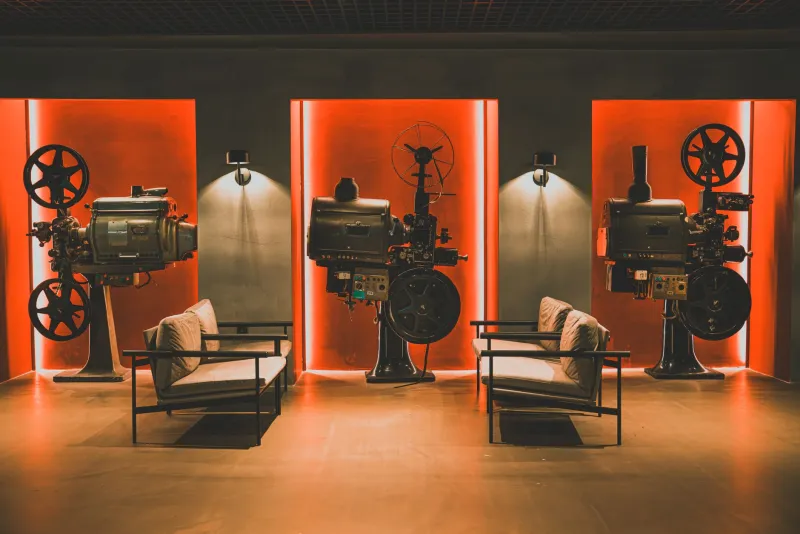
His workshops run over two or three weekends. Six students maximum. They shoot on 16mm, they process in a darkroom down the hall, and they watch their footage projected — actually projected, on a wall — before they ever talk about editing. The sequence is intentional. See the image as a physical thing before you think about manipulating it.
The Curriculum the Academy Dropped
Light theory. Exposure mathematics. The relationship between frame rate and motion rendering. The optical properties of different focal lengths and how they affect spatial compression. These are subjects that film school curricula have progressively compressed as digital production made many of the underlying decisions automatic.
In the underground workshops, they're the entire point.
"I spend a full day on the zone system before anyone touches a camera," says one facilitator who teaches out of a converted garage in rural New Mexico. "Ansel Adams developed it for photography but it maps directly to cinematography. You have to understand the full tonal range you're working with before you can make intentional choices about where to place your subject in that range. That's not abstract. That's craft."
The students in these programs are a specific kind of self-selected. They're not people looking for the fastest path to a YouTube channel or an Instagram reel. They're aspiring cinematographers who looked at the images being made in the current content economy and felt something missing — a quality of attention, a weight to the frame — and went looking for where that quality was still being taught.
Some come from film programs where they felt like the analog component was treated as historical footnote rather than living practice. Some come from outside filmmaking entirely — painters, photographers, musicians — drawn by the physicality of the medium. A few come because they saw a piece of old footage somewhere and couldn't stop thinking about how it was made.
The Community That Forms Around the Grain
What these workshops produce, beyond technically grounded image-makers, is community. The cohort that goes through a multi-weekend intensive together tends to stay connected. They share equipment. They crew for each other. They build a shared aesthetic vocabulary that's increasingly rare in an industry where everyone is trained on the same software and optimizing for the same platforms.
"There's a shorthand that develops," says Keiko, who completed one such program two years ago and has since assisted on three independent feature projects. "When I'm on set with someone who came up through analog training, we don't have to explain certain things to each other. We're starting from the same place."
That shared foundation is part of what makes these informal networks function as genuine counterculture rather than just a hobbyist niche. The people coming out of them are making work that looks and feels different — not because they're trying to be contrarian, but because they were trained to see differently. The grain is real. The light decisions are real. The compositions weren't arrived at by default.
The Film the Algorithm Won't Recommend
There's a broader cultural argument underneath the technical one, and the people running these workshops are generally willing to make it explicitly.
Algorithm-driven content platforms don't just distribute images — they shape what images get made. The feedback loops are fast and relentless. What performs well gets replicated. What doesn't gets abandoned. Over time, that pressure produces a kind of visual monoculture: similar color grades, similar focal lengths, similar rhythms of cutting. It's not that individual creators aren't talented. It's that the system they're optimizing for has a strong gravitational pull toward sameness.
Analog film training is, among other things, a way of stepping outside that gravitational field long enough to develop a visual sensibility that belongs to the person holding the camera rather than to the platform displaying the result.
"I want my students to know what they think a good image is before anyone else tells them," Dara says. "That's the whole thing. Everything else is technique."
The Bolex sits on the table. Someone picks it up for the first time. They hold it wrong, then right, then wrong again. Outside, the afternoon light is doing something specific and unrepeatable to the street below the loft window. Dara tells them to look at it. Really look at it. Before the camera. Before anything.
That's where it starts.