Grain and Glory: The Underground Projectionists Who Refuse to Let Celluloid Die
There's a sound that happens right before the image hits the screen. A mechanical stutter, a soft whir of sprockets catching, and then — light. Real light, pushed through actual film, throwing a living, breathing picture onto a wall. If you've never heard it, you might not understand why people are building entire subcultures around chasing that moment. If you have heard it, you already know this article isn't really about movies.
It's about devotion.
The Booth Nobody Talks About
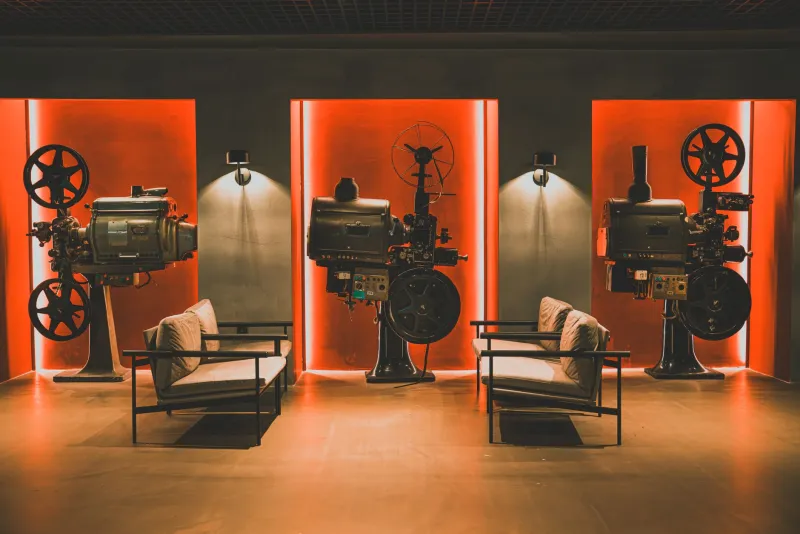
Most multiplex-goers have never seen a projection booth. Modern digital systems don't need much human intervention — a server rack, a hard drive, a few button presses. The booth is basically a closet now. But walk into a revival house in Chicago, a drive-in outside Tucson, or a basement screening club in East Nashville, and you might find something else entirely: a room full of machinery that smells like oil and warm metal, operated by someone who learned this craft the hard way and has zero interest in retiring it.
These are the last projectionists. And they are very much still out here.
Some of them worked union jobs at theaters that no longer exist. Some learned from a parent or an older colleague who saw the digital transition coming and wanted to make sure the knowledge didn't vanish with the equipment. A few are younger — twenty-somethings and early-thirties folks who stumbled into a revival house, got obsessed, and basically begged someone to teach them. The apprenticeship is informal, almost secretive. There are no trade schools running 35mm programs anymore. You learn by standing in a booth for hours, watching someone else do it, and then slowly, carefully, doing it yourself.
"It took me about six months before I stopped being terrified every time I threaded a reel," says Marcus, a projectionist in his mid-thirties who runs screenings out of a rented warehouse space in Philadelphia. He asked us not to use his last name because the space operates in a legal gray area. "Film breaks. Splices fail. The gate gets dirty. You have to be paying attention every single second, or you ruin the print. And some of these prints are irreplaceable."
Why Anyone Would Choose This
Let's be honest: 35mm is a logistical nightmare. Prints are heavy, fragile, and expensive to rent or acquire. Projectors require constant maintenance. Bulbs burn out. The film itself can warp, scratch, or snap mid-screening. Compared to loading a digital file, it's like choosing to cook over an open fire instead of using a microwave. So why are more people — not fewer — showing up to these screenings?
Part of it is the image itself. Film has grain. Digital has pixels. These aren't interchangeable things. Grain is organic, alive, slightly different in every frame. It breathes. It gives the image a texture that even the most expensive digital projection can't fully replicate. Cinematographers have talked about this for decades, but audiences are starting to feel it in their bones without being able to name it. They just know something is different. Something is more.
But the bigger pull might be communal. Watching a 35mm print of, say, Chinatown or Do the Right Thing in a room full of people who chose to be there — who made an effort, who showed up knowing it wasn't going to be perfect — creates a different social contract than streaming. There's a shared vulnerability to it. The film might break. The sound might drift. The projectionist might have to stop and splice a reel back together while everyone waits in the dark. And somehow, that's better. That's more honest.
The Revival Circuit
Across the US, a loose network of venues and collectives is keeping the format alive. Some are established institutions — the Alamo Drafthouse locations that still program 35mm, the New Beverly Cinema in Los Angeles, the Brattle Theatre in Cambridge, Massachusetts. Others are more underground: pop-up screenings in art galleries, church basements, parking structures, and rooftop spaces that exist for a night and then dissolve back into the city.
What connects them is a shared belief that cinema is not just content. It's an event. It's something that happens to you in a specific place, at a specific time, with specific people. Streaming gave us convenience and took away the occasion. These projectionists — and the communities that form around them — are in the business of restoring the occasion.
Some collectives have gone even further, sourcing and restoring their own prints. Film preservation is a whole other rabbit hole, one that connects projectionists with archivists, film labs, and collectors who haunt estate sales looking for canisters of forgotten footage. The overlap between the projectionist community and the underground collector world is significant. These are people who understand that if you don't actively fight for something, it disappears.
Passing It Down
The most urgent thing happening in this world right now isn't a screening or a restoration project. It's the question of who comes next.
The projectionists who learned the trade professionally are getting older. Theaters stopped hiring for these roles when digital took over in the early 2010s. The institutional knowledge — how to maintain a Simplex, how to read a print for damage, how to time a changeover cue so the audience never notices the reel switch — exists almost entirely in people's heads and hands. When those people are gone, it's gone.
So they're teaching. Informally, urgently, with a kind of low-key intensity that feels almost like a handoff. Weekend workshops in projection booths. Late-night sessions after screenings. Handwritten notes and YouTube channels with small but fierce subscriber bases. The community is building its own infrastructure because no one else is going to build it for them.
"I'm not doing this because I think film is going to make a big commercial comeback," Marcus tells us, rewinding a reel with the casual efficiency of someone who's done it ten thousand times. "I'm doing it because it deserves to be understood. Because the people who made these movies deserved to have them seen this way. And because honestly? There's nothing else that feels like this."
The projector hums. The light catches. The grain dances.
Somewhere in the dark, an audience holds its breath.