Hiss and Signal: Inside the Cassette Networks Quietly Rewinding American Music Culture
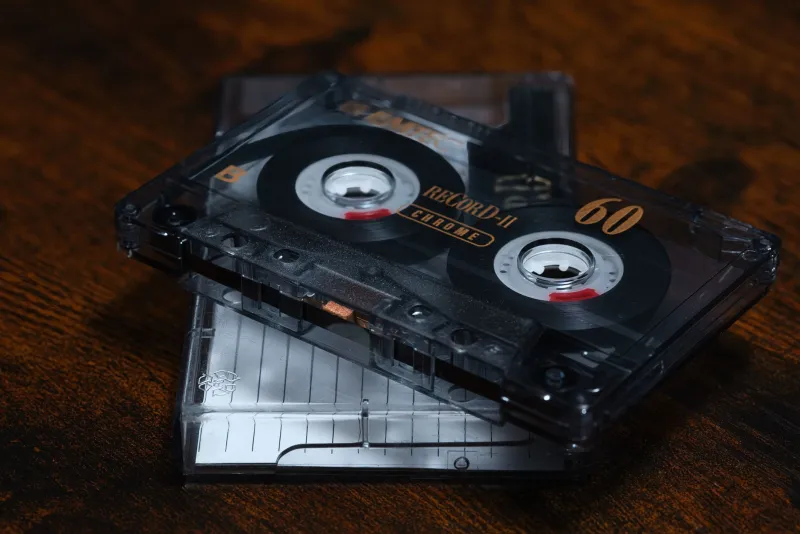
The package arrives looking like nothing. A padded mailer, hand-addressed in ballpoint pen, the return address sometimes a real street and sometimes just a city and state. Inside: a cassette tape, usually in a clear plastic case, usually with a hand-drawn or photocopied j-card. Sometimes there's a note. Sometimes there's just the tape. You already know what to do with it.
This is the cassette underground, and it is not a nostalgia project. It is not a retro aesthetic. It is a functioning, evolving, genuinely weird parallel music economy that has been running continuously — through the CD boom, through the MP3 era, through the streaming takeover — and is currently experiencing something that its participants are careful not to call a renaissance, because that would imply it ever stopped.
The Tape Never Actually Died
Here's what the music press got wrong every time it wrote the cassette's obituary: the underground never stopped using them. When major labels abandoned tape in the mid-90s, the format didn't disappear. It migrated. It went deeper into the DIY ecosystem, where it had always belonged anyway.
The economics made sense for small-run releases in a way that CDs never quite did. Blank tapes were cheap. Dubbing equipment was available. A hundred-copy run of a demo or a debut release could be produced in someone's bedroom for a fraction of what pressing a CD would cost, with a physicality and tactility that felt intentional rather than cheap. The hiss wasn't a flaw. It was a signature.
Through the 2000s, while the industry was busy figuring out digital distribution, underground music scenes — noise, black metal, harsh electronic, bedroom pop, avant-garde jazz, and dozens of other genres that existed entirely outside the mainstream — kept releasing on tape. The format accumulated cultural meaning through continued use, not through revival.
The Mail Network
Before the internet made everything instantly accessible, tape trading happened through mail. You'd find a listing in a zine, or get a recommendation from someone at a show, and you'd write a letter — an actual letter — explaining who you were and what you were looking for. If the response was positive, you'd send a tape. They'd dub it, send it back with something of their own. The network grew through these individual exchanges, person to person, envelope by envelope.
That system didn't disappear either. It evolved. Private forums and encrypted messaging apps replaced the letter-writing, but the physical exchange persisted. There are active tape-trading communities operating right now through channels that require an introduction to access — Discord servers with invite-only policies, mailing lists that you get added to by someone who already knows you, forum threads that read like coded correspondence to the uninitiated.
The gatekeeping is intentional. This is a community that has watched digital openness hollow out other music cultures and has drawn some conclusions. When everything is accessible to everyone instantly, nothing feels like it belongs to anyone. The friction of the tape trade — the waiting, the reciprocity, the physical handling — creates a different kind of relationship between music and listener.
Bedroom Labels and the Art of the Small Run
Across the country, a loose ecosystem of micro-labels has built entire identities around cassette releases. Some of them are one-person operations running out of apartments. Some are small collectives with a shared aesthetic and a shared mailing address. Almost none of them have distribution deals, mainstream press coverage, or social media strategies.
What they have is catalogs. Real, physical, numbered catalogs of releases — each one a cassette with hand-assembled packaging, often with inserts, sometimes with objects tucked inside the case. The releases sell out in hours or days to mailing lists of people who've been following the label's output for years. Secondary market prices for rare tapes from respected labels can reach hundreds of dollars.
The artists releasing on these labels have made a choice that's worth taking seriously. They could put the music on streaming. They choose not to, or they release a limited version while keeping the full work tape-only. That's not Luddism. That's a statement about how they want their music to exist in the world — who gets it, how they get it, what relationship they have with it.
The Sound of Tape
Let's talk about the actual audio for a second, because the aesthetic dimension is real and it matters. Cassette tape has a frequency response, a noise floor, a saturation characteristic. When you record to tape and play it back, something happens to the sound that no digital plugin has perfectly replicated, despite decades of trying.
For certain kinds of music — lo-fi bedroom pop, drone, harsh noise, ambient, raw black metal — that tape character isn't a limitation to be overcome. It's a compositional element. Musicians are writing for the format, making decisions about levels and frequency content with the tape's behavior in mind. The medium shapes the music.
This is why tape releases aren't just physical editions of music that exists elsewhere. At their best, they're the definitive version — the one the artist made for this format, the one where the sound is doing exactly what it's supposed to do.
Collectors and the Rarity Economy
Parallel to the new-release tape scene, there's a bootleg and archival trading culture that operates in even more restricted channels. Live recordings, unreleased sessions, radio broadcasts, obscure regional releases — all of it circulates among collectors who have been building their holdings for decades.
These aren't people trying to rip off artists. Most of them are deeply committed to the musicians whose work they collect, often serving as informal archivists for performances that would otherwise exist only in the memories of people who were there. They've preserved things that the artists themselves no longer have copies of.
The ethics are complicated and the community debates them constantly. But the preservation function is real. If you want to hear what a certain noise musician sounded like playing a basement in Richmond in 2007, there's a decent chance someone recorded it on a handheld recorder, dubbed it to tape, and has been trading copies ever since.
What Tape Means Right Now
In an era when streaming has made music simultaneously ubiquitous and weightless, cassette culture represents a deliberate investment in weight. You have to want the tape. You have to seek it out, pay for it, find a way to play it. That friction is the point.
The communities built around tape — the labels, the traders, the collectors, the musicians — understand something about how scarcity and physicality create meaning. They're not anti-technology. They're pro-intentionality. They want the music to mean something to the person holding it, and they've figured out that a cassette in a padded mailer accomplishes that in a way that a streaming link never quite does.
The tape hisses. The heads need cleaning. The shell sometimes cracks if you drop it wrong. None of that is a problem. All of it is the point.