Skin Deep, Story First: The Off-Grid Tattoo Shops Keeping America's Subcultures Alive One Flash Sheet at a Time
Skin Deep, Story First: The Off-Grid Tattoo Shops Keeping America's Subcultures Alive One Flash Sheet at a Time
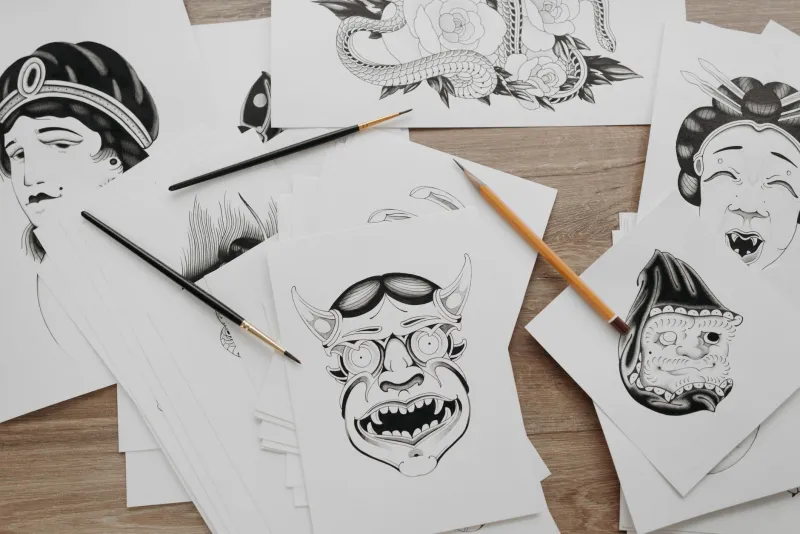
There's a door in a mid-size Midwestern city — no sign, no logo, no hours posted — that opens into a room covered floor to ceiling in hand-drawn flash. Not the clean, algorithmic kind you scroll past on Instagram. Old-school stuff. Panthers mid-pounce, religious iconography blended with neighborhood slang, block letters spelling out street names that got renamed after the development money moved in. The artist who works here has been tattooing for over a decade. She has never made a Yelp page. She says she never will.
"If you find me, you find me," she told a friend of a friend who eventually told us. "That's the point."
This is the underground tattoo world — and it is thriving precisely because it refuses to be found.
The Shop Model Was Never Built for Everyone
The mainstream tattoo industry cleaned itself up. That was supposed to be a good thing. Licensing requirements, standardized safety protocols, sleek storefronts with curated portfolios on Instagram — the industry spent twenty years trying to shake its outlaw reputation, and in a lot of ways it succeeded. Walk into a high-end shop in any major American city today and you might as well be at a gallery opening. Appointment waitlists stretch for months. Prices have climbed to match fine dining. The whole aesthetic has been optimized for the kind of person who uses the word aesthetic.
But something got lost in the polish.
For a lot of communities — working class neighborhoods, queer enclaves, immigrant communities, subcultures that never had a seat at the gallery table — the sanitized shop model was never really built for them in the first place. The art they wanted, the symbols that mattered to them, the iconography that carried real weight in their specific corner of the world — none of it fits neatly into a curated portfolio designed to go viral.
So they built something else.
Flash Sheets as Living Archives
The flash sheet — that grid of pre-drawn designs a tattoo artist offers as ready-to-go options — has a long history in American tattooing. For most of the modern era, it got treated as the lesser cousin of custom work. Generic roses, basic anchors, stuff you could get anywhere. But in underground shops, flash sheets have evolved into something genuinely different: neighborhood documents.
In South Central Los Angeles, artists are drawing flash that incorporates lowrider culture, Aztec symbolism, and the specific visual language of blocks that have been fighting gentrification for years. In parts of Detroit, you'll find flash sheets referencing defunct auto plants, local church imagery, and symbols tied to specific block clubs that have no meaning outside a ten-square-mile radius. In New Orleans, underground artists are preserving Mardi Gras Indian iconography and second-line culture in ways that the tourism-facing tattoo industry rarely bothers with.
These sheets aren't just art. They're records. When a neighborhood changes — when the corner store becomes a juice bar and the old church becomes condos — the flash on those walls is sometimes the only thing that remembers what was there.
The Legitimacy Trap
Here's where it gets complicated. Operating outside the licensed shop model means operating outside legal protection. Most underground tattoo artists are working in gray areas — some states have stricter regulations than others, some artists have licenses they use selectively, some are operating entirely outside the regulatory framework. The safety argument is real and shouldn't be dismissed. Bloodborne pathogen training, sterilization protocols, proper disposal — these aren't bureaucratic formalities. They matter.
But the artists in these spaces aren't reckless. Most of them are deeply serious about safety, self-taught or trained through apprenticeships with experienced artists who passed down both technique and hygiene practice. What they're rejecting isn't safety — it's the gatekeeping that comes bundled with legitimacy.
Licensing costs money. Storefronts cost money. The whole apparatus of running a "real" shop costs money that creates a financial pressure to serve the clientele that can afford it — which tends to skew in a very particular demographic direction. Going underground isn't always a choice. Sometimes it's the only way to keep serving the community that actually raised you.
"I'm not trying to be illegal," one artist operating out of a converted garage in East Austin explained. "I'm trying to not price out the people I grew up with."
Rooms You Won't Find on a Map
The geography of underground tattooing is intentionally unmappable. Word of mouth is the only algorithm that operates here. You know someone who knows someone. You get a number. You text, you talk, you maybe get a location a day or two before your appointment. The shop might be in an apartment living room with the furniture pushed to the walls. It might be in the back of a record store that doesn't advertise the back room. It might be in a warehouse space shared with a screen printer and a band that rehearses on weekends.
The impermanence is part of the culture. These spaces move. They close when the artist needs a break and reopen when the energy is right. There's no Yelp page to maintain, no Google reviews to manage, no brand identity to protect. The reputation lives entirely in the people who've been tattooed and the stories they carry out the door.
That word-of-mouth circuit is also a kind of protection — not just for the artist, but for the clients. Underground shops tend to be community-specific. You're not walking into a space full of strangers. You're walking into a room where the artist probably knows your cousin, has tattooed your neighbor, grew up three blocks from where you did. The intimacy is structural.
Why This Matters Right Now
Tattooing went mainstream and the culture got richer for it in some ways — more visibility, more diversity of styles, more people feeling like the art form belonged to them. But mainstream always comes with a cost. The further tattooing moves toward the gallery model, the more it risks becoming a luxury product rather than a community practice.
The underground shops are the counterweight. They're the spaces where the art stays connected to the people it came from — where a tattoo isn't a status symbol or a carefully curated piece of personal branding, but a mark that means something specific to a specific person in a specific place.
America has a long history of treating working-class and subcultural art forms as raw material — mining them for aesthetics, cleaning them up, and selling them back at a premium. The underground tattoo world is one of the few spaces still actively resisting that pipeline.
The best skin art in America right now is happening in rooms with no sign on the door. You probably won't find it. That's exactly how the people making it want it.